
Article Directory
An automatic cartoning line running at 60 cartons per minute rejects a folding carton that is 0.4 mm out of square long before a shopper notices a printing flaw. Cartons that jam in the magazine, spring open at the glue seam, or split along a crease are almost always failing because of a die or folder setting, not because of the printing press.
Die-cutting decides where the board is cut and where it is compressed. Folding turns those compressed lines into hinges. A crease 0.05 mm too shallow holds a carton open; a crease 0.05 mm too deep breaks the coating on 350 gsm white card and leaves a white line across a premium cosmetic pack.
Suzhou New Century Color Printing Co., Ltd. has converted folding cartons and corrugated boxes from its Suzhou National High-Tech District plant since 2000, across grades from 250 gsm coated board to heavy double-wall corrugated. The failure patterns below are the ones that surface on filling lines, in retail distribution centres, and in e-commerce returns.
Die-cutting fixes the outer dimensions, panel widths, and crease positions of a carton, and it is the step where tolerance is either held or lost. A steel rule die on a maintained flatbed press holds plus or minus 0.3 mm on a 350 gsm folding carton; past plus or minus 0.5 mm, cartons begin catching in the magazine of an automatic cartoning machine.
A die board is not one tool. Cutting rules slice the outline, crease rules press fold lines into a matrix channel beneath the board, ejection rubber lifts the blank clear of the rules, and nicks leave small uncut bridges that hold blanks inside the sheet until stripping. The elements interact: a matrix channel 0.1 mm too wide flattens the crease without compressing fibres, and ejection rubber that is too hard bows the sheet and varies crease depth across it.
Crease geometry is the pairing of crease width, the flattened channel produced when a crease rule presses board into a matrix, and residual caliper, the board thickness still present at the bottom of that channel. Both are set at the die-cutter. Neither can be corrected later on the folder-gluer.
Tolerance also compounds in ways buyers rarely anticipate. Two folds each 0.4 mm wide of nominal move the erected carton's inner length by 0.8 mm, which is the difference between a lid that drops on and a lid that has to be forced.
| Parameter | Typical target | What it controls |
| Print-to-cut registration | +/-0.3 mm | Window film position and artwork alignment |
| Blank outer dimension | +/-0.3 mm folding carton, +/-0.8 mm corrugated | Feeding in the cartoning magazine |
| Crease width | 1.6 to 2.0 times board caliper | Hinge quality, cracking versus spring-back |
| Residual caliper at crease | 30 to 50 percent of original caliper | Fibre survival at the folded edge |
| Glue flap width | 12 to 15 mm on 350 gsm board | Seam strength and shelf pop resistance |
A carton folds cleanly when at least 30 percent of the board caliper survives at the crease and the fold runs parallel to the paper grain. On a 350 gsm coated board, a fold made against the grain concentrates bending stress on the coated surface and is the most frequent cause of the hairline cracks that appear on premium retail packaging after a few weeks on the shelf.
Grain direction is fixed when the mill makes the board and normally runs along the long dimension of the sheet. Carton layout therefore has to be planned before artwork, not after: every panel folded more than 120 degrees should sit on a crease running with the grain.
Working from caliper is the reliable way to set a crease. The chart below applies the 1.6 to 2.0 rule to four common folding carton grades, and it is the figure a die-maker needs before cutting a die board.
Recommended crease width by board caliper
Folding is not only a die decision. On a folder-gluer, a pre-breaking station folds and reopens every crease to remove the memory of the flat sheet. Folding belts, machine speed, and the length of the compression section then decide whether the seam holds. A compression section too short for the adhesive open time produces cartons that look sealed at the delivery end of the machine and open inside the shipping carton two days later.
Carton complaints that reach a converter trace back to a short list of die and folder settings rather than to the printed sheet. The symptom tells you which setting to check first.
Die-cut tolerance control is a documented process rather than a visual judgement. Checking a first article against a numbered drawing, inspecting the crease under magnification, and re-measuring after every re-rule is the routine set out in die-cut tolerance quality control practice, and it applies equally to a cosmetic carton and a corrugated shipper.
A rotary die-cutter on B-flute corrugated board holds roughly plus or minus 0.8 mm, and the slot depth of a FEFCO 0201 regular slotted container must equal half the box width so the two outer flaps meet within 3 mm. Wider tolerance is acceptable in transport packaging because the box is not judged on shelf appearance, but the structural consequences of a misplaced cut are larger.
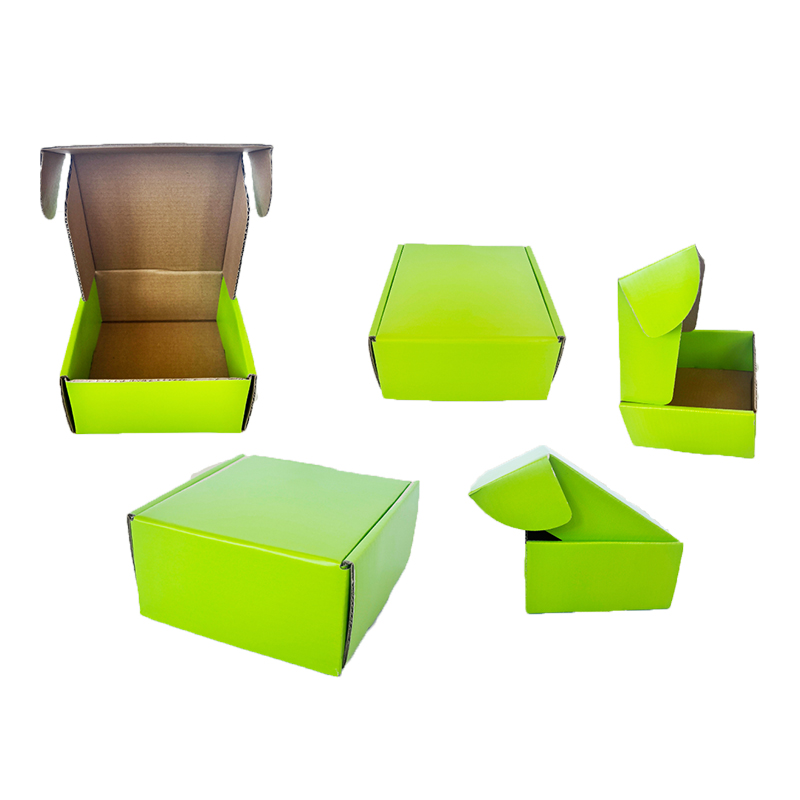 E-Commerce Mailer Printing Corrugated Airplane Box Aircraft Shipping Paper BoxE-Commerce Mailer Printing Corrugated Airplane Box Aircraft Shipping Paper Box is a corrugated box designed for e-commerce, with good compression resistance and protec...View Product →
Flutes carry compression strength, and a box performs best when they stand vertically in the erected container, which means the die layout has to be planned across the flute direction of the sheet. Cutting a hand hole or display window into a load-bearing panel interrupts those flutes. Industry guidance treats a hand hole on a load-bearing panel as a 5 to 10 percent reduction in box compression strength, and the only reliable confirmation is a compression test to ASTM D642 on the finished box, with edge crush data measured to TAPPI T811.
Scores on corrugated are set differently from folding carton creases. A slot cuts through the board while a score compresses it, and on a double-wall grade an under-set score leaves the board fighting the fold while an over-set score crushes the inner liner and removes the compression strength the box was specified for.
Retail folding cartons are judged at the shelf and at the doorstep. A hanging hole must sit within plus or minus 1 mm of the artwork axis so the pack hangs level on a peg, a tear-open perforation should release between 8 N and 15 N so it opens deliberately instead of ripping the panel, and a crash-lock base depends entirely on crease accuracy, because a 0.2 mm error stops the base locking flat.
Crash-lock, or auto-bottom, cartons are the clearest test of folding control. Four interlocking flaps must fold in one motion and lock under tension: loose creases let the base bulge, tight creases stop the flaps sliding past each other. The same principle governs tear-strip PDQ tote cartons, where the tear line is die-cut to a controlled depth so it separates on the first pull without splitting the printed panel.
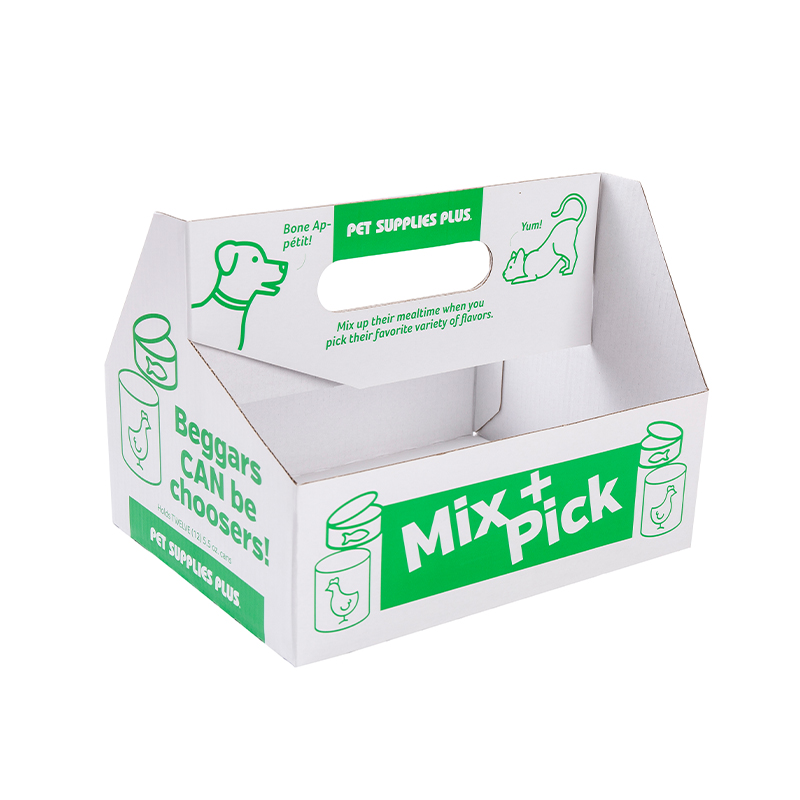 Tear-Off Foldable PDQ Tote Cartons, Collapsible Cardboard BoxTear-Off Foldable PDQ Tote Cartons are a portable packaging design for displaying and selling small items in a retail environment. It is made of foldable cardboard mat...View Product →
Windows add a second tolerance. A PET window is patched into a die-cut aperture, and the aperture must be cut to plus or minus 0.3 mm or the film wrinkles at the corners and reflects store lighting unevenly.
A pizza carton or burger clamshell is graded on how fast a crew member can erect it one-handed during a rush: lock tabs must engage within 2 mm, and a corrugated pizza box should reach full lock in under three seconds. That is a folding specification, not a design preference.
 Pizza Foldable Corrugated Packaging Carton, Coloured Corrugated BoxesPizza Collapsible Corrugated Packaging Carton is a carton specially designed for packaging and carrying pizza. It is made of corrugated cardboard material, which is st...View Product →
Two details decide it. The lid hinge on a pizza box is a double score that lets the lid open and close repeatedly without cracking, and if the two scores sit closer than one board caliper they merge into a single weak line. Lock tabs are die-cut to a slot width matched to board thickness, and a slot 0.3 mm too narrow will not accept the tab once the board absorbs steam from a hot product. Grease-resistant liners and venting patterns are printed and coated before die-cutting, so the layout has to keep vent slots clear of the lock mechanism.
Six checks on a first-article sample find die and fold problems while they are still cheap to correct, before the die board is approved and the folder-gluer is set for production.
A carton that measures correctly on a flat sheet and fails on a filling line is almost never a printing problem. It is a crease problem that was never tested in the erected state.
Die-cutting and folding are the two steps where a packaging specification becomes a physical object, and the numbers that matter are small: crease width within 1.6 to 2.0 times board caliper, residual caliper of 30 to 50 percent, print-to-cut registration of plus or minus 0.3 mm, and fold lines that follow the grain. Hold those four values and a carton behaves the same way on the filling line, on the shelf, and at the customer's door.
Suzhou New Century Color Printing Co., Ltd. has converted folding cartons and corrugated transport boxes from its Suzhou facility since 2000, across a plant covering offset and flexographic printing, die-cutting, window patching, and folder-gluer finishing. Buyers specifying a new carton should ask for an erected first-article sample rather than a flat one, because that is the fastest way to see whether the crease geometry will survive contact with a real filling line.
Specify plus or minus 0.3 mm on folding cartons from 250 to 400 gsm and plus or minus 0.8 mm on corrugated transport boxes. Anything looser than plus or minus 0.5 mm on a folding carton starts to cause magazine feeding faults on automatic cartoning lines running above 40 cartons per minute.
Cracking means residual caliper at the crease fell below 30 percent of board thickness, or the fold runs against the paper grain. Both are die and layout decisions, so the fix is to re-set the crease rule and matrix and re-orient the panel so major folds run with the grain.
Yes, whenever a cutout interrupts the flutes on a load-bearing panel. Industry guidance treats a hand hole on a load-bearing panel as a 5 to 10 percent reduction in box compression strength, and the real effect should be confirmed by testing the finished box to ASTM D642 rather than estimated.
A steel rule die board is typically laser-cut and built in two to four working days, and a first-article erected sample usually follows within five to seven working days of approved artwork. Tooling time should be planned before the print run, because a crease change can require a new die board.
Our custom designed home appliance packaging cartons provide... View More
Matt Film Hot Stamping Aromatherapy Carton is made of high-q... View More
Customizable Shapes Corrugated Paper Display Boxes & Car... View More
Printed Colorful Candy Packaging Carton Box is a high-qualit... View More
No. 88, Zhiying Street, High-tech Zone, Suzhou City, Jiangsu Province, China.
+(86)-512-6575-0991
+(86)-13776090470

Copyright © SuZhou New Century Color Printing Co., Ltd. Custom Printed Colored Corrugated Boxes





 Français
 Español
 عربى