Français
 Español
 عربى
عربى


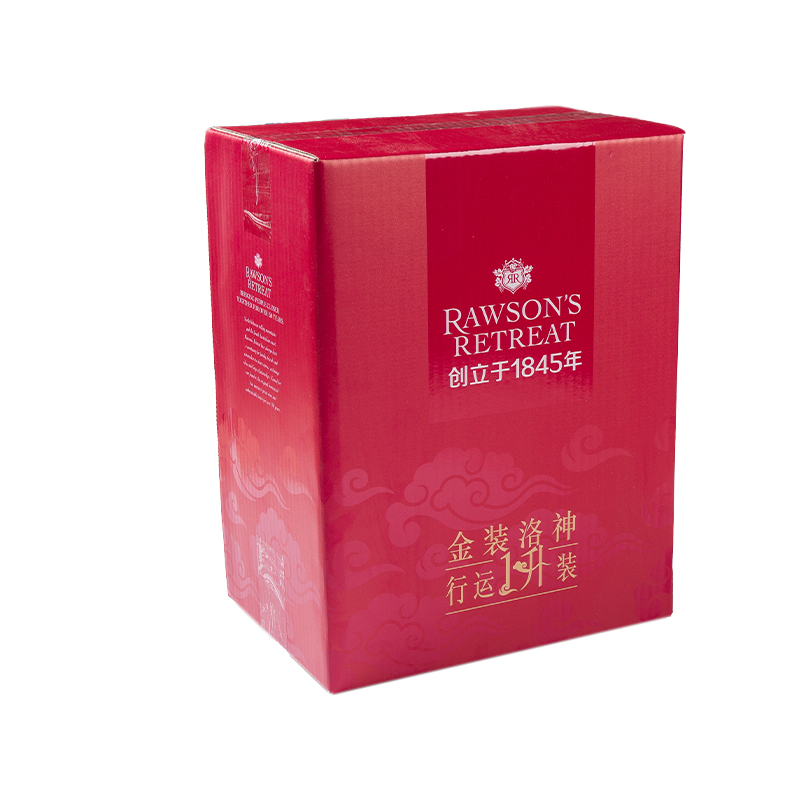
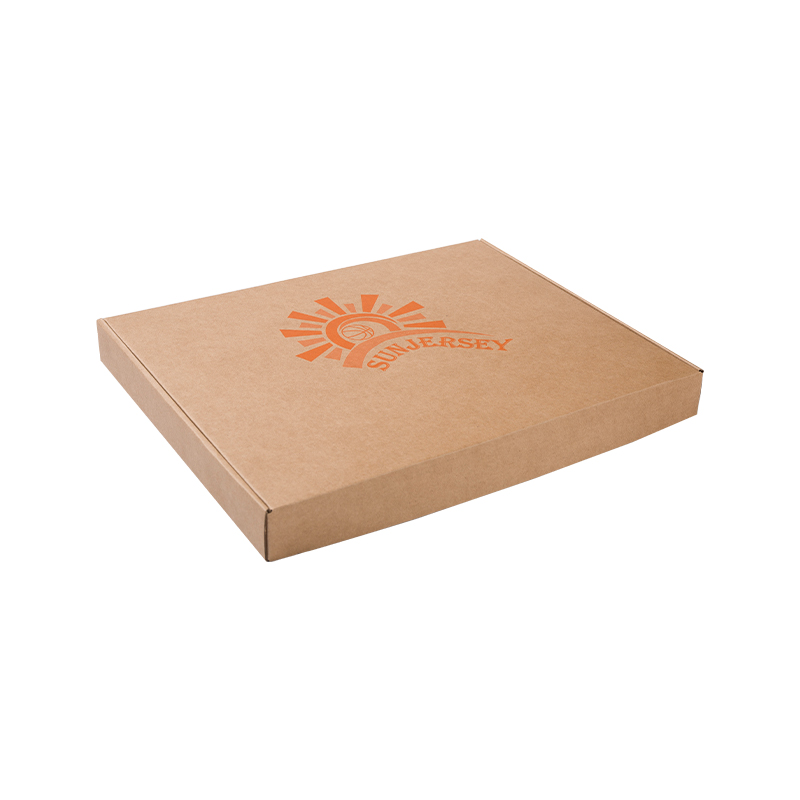
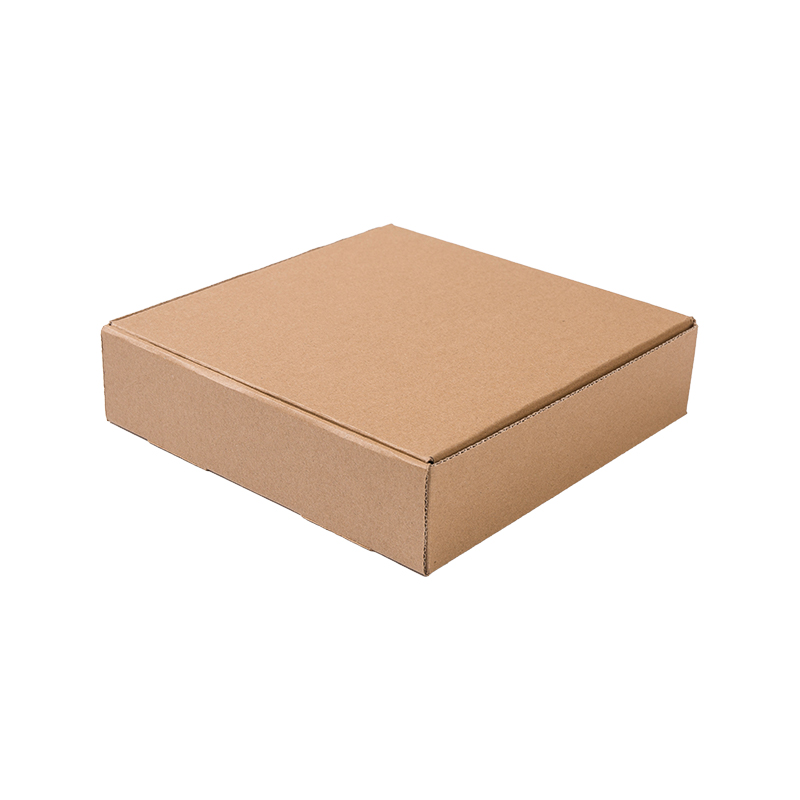
Corrugated boxes are structured packaging containers made from corrugated fiberboard — a layered material consisting of one or more fluted (wavy) paper sheets bonded between flat liner sheets. They are the dominant form of product shipping and storage packaging worldwide, used across virtually every industry from e-commerce and food to electronics and industrial equipment. The term "corrugated box" specifically refers to the fluted internal structure that distinguishes these containers from plain cardboard boxes, giving them superior crush resistance, stacking strength, and cushioning relative to their weight.
What Does "Corrugated Box" Actually Mean?
The word "corrugated" describes the arched, wave-like fluting that runs through the interior medium of the board. This flute structure is the engineering core of the product: the arches distribute compressive load across the entire panel rather than concentrating stress at a single point, working on the same structural principle as an arch bridge or a Gothic vault. A sheet of corrugated fiberboard that a person can crush with one hand in the flat orientation becomes resistant to hundreds of kilograms of stacking force when formed into a box, purely because of how the flute geometry redirects force.
It is worth clarifying the terminology because "cardboard box" and "corrugated box" are frequently used interchangeably in everyday speech but refer to different materials:
| Term | Construction | Typical Use | Strength |
|---|---|---|---|
| Corrugated box | Fluted medium + one or two flat liners | Shipping, heavy product packaging | High — engineered load-bearing |
| Chipboard / solid cardboard box | Single solid compressed paper sheet | Cereal boxes, shoe boxes, retail packaging | Low — not designed for stacking loads |
| Paperboard carton | Single or multi-ply coated board | Food and beverage retail packaging | Moderate — surface strength only |
| Fibreboard drum | Spiral-wound solid paperboard | Bulk powders, liquids | High — cylindrical compression |
A genuine **corrugated box** will show the visible fluted layer when viewed at the cut edge. If the cross-section shows a single solid layer of compressed paper, it is chipboard, not corrugated. This distinction matters when specifying packaging for shipping — chipboard boxes are not rated for parcel carrier handling or pallet stacking and will fail under transit conditions that corrugated boxes handle routinely.
What Are Corrugated Boxes Used For?
Corrugated boxes carry approximately 95% of all goods shipped in the United States, and the ratio is broadly similar across developed economies globally. Their dominance is not accidental — the material offers a combination of structural performance, printability, customisability, recyclability, and cost per unit of protection that no competing packaging format has consistently matched since corrugated fiberboard was first patented in 1871. The practical applications fall into several major categories:
E-Commerce and Direct-to-Consumer Shipping
The exponential growth of online retail over the past decade has made the corrugated shipping box one of the most visible consumer-facing packaging formats in existence. A standard RSC (Regular Slotted Container) box used by major carriers is engineered to survive a minimum of six handling events — pick-up, sortation, transfer, sortation, delivery vehicle loading, and delivery — with drop heights of up to 60 cm as defined by ASTM D4169 performance standards. The box must also resist compression from packages stacked above it in transit, where a box at the bottom of a delivery vehicle stack may bear a dynamic load of 80–120 kg during cornering and braking.
Food and Beverage Packaging
Corrugated boxes are the primary secondary and tertiary packaging format for food products. A single banana shipment from Central America to European supermarkets involves corrugated boxes that must maintain structural integrity through refrigerated shipping at 13–14 degrees Celsius and 90–95% relative humidity for 14–21 days — conditions that would destroy untreated corrugated board. Wax-treated or polymer-coated corrugated boxes used in produce shipping are specifically engineered to maintain 70–80% of their dry compression strength under these humid conditions. The food industry uses corrugated for:
- Fresh produce transit boxes (banana boxes, tomato trays, berry punnets)
- Beverage multipacks and shelf-ready display cases
- Frozen food master cartons rated for -18 to -25 degree storage
- Dry goods bulk containers (cereals, pasta, baking products)
- Refrigerated dairy and meat secondary packaging
Electronics and Fragile Goods
Consumer electronics manufacturers use double-wall and triple-wall corrugated constructions for shipping products where impact damage is both likely and costly. A double-wall corrugated box with C/B flute combination achieves an Edge Crush Test (ECT) rating of 44–48 lbs/in — sufficient to protect a television or monitor through standard parcel carrier handling. The internal cushioning is often created by die-cut corrugated inserts rather than expanded polystyrene foam, reducing material cost and improving recyclability without compromising drop protection.
Industrial and Heavy Equipment
Triple-wall corrugated boxes and heavy-duty corrugated skid packs replace wooden crates in many industrial shipping applications. A triple-wall box with AAA flute construction achieves compression strengths exceeding 1,500 kg — comparable to lightweight plywood crating at a fraction of the cost and weight. Engine components, hydraulic systems, and precision machined parts are routinely shipped in triple-wall corrugated packaging with custom die-cut internal supports that hold the component in fixed orientation throughout transit.
Retail Display and Point-of-Sale
Shelf-ready packaging (SRP) and retail-ready packaging (RRP) corrugated formats are engineered to move directly from the delivery truck onto the retail shelf floor or shelf display unit without repacking. The front panel of the box is pre-perforated to tear away cleanly, leaving the remaining three walls as a display tray that presents the product to the consumer. Major grocery retailers including Walmart, Tesco, and Carrefour now require SRP-compatible corrugated packaging from many of their FMCG suppliers as a condition of ranging.
How to Measure Corrugated Boxes
Corrugated boxes are always measured and specified in a fixed sequence: Length x Width x Depth (L x W x D). This sequence is universal across packaging manufacturers and carriers, and deviating from it creates costly errors in ordering, label application, and void-fill calculation. Understanding precisely what each dimension refers to — and whether the measurement is interior or exterior — is essential for anyone ordering or specifying corrugated packaging.
The Standard Measurement Convention
- Length (L): The longest horizontal dimension of the box opening when the box is open and upright. Always the largest of the two opening dimensions.
- Width (W): The shorter horizontal dimension of the box opening. Always smaller than or equal to the length.
- Depth (D): The vertical dimension — how tall the box is when upright. Also called Height in some regions and by some manufacturers.
Industry standard practice measures the interior dimensions of the box. This is because the purpose of the measurement is to confirm that the product will fit inside — the exterior dimension, which is larger by twice the board caliper (typically 4–12 mm per wall depending on flute type), is relevant for pallet planning and carrier dimensional weight calculations but is derived from the interior measurement rather than specified directly.
Interior vs. Exterior Dimensions — Why It Matters
| Measurement Type | Used For | Difference from Interior |
|---|---|---|
| Interior (inside) dimensions | Product fit confirmation, void-fill calculation | Baseline — add board caliper to derive exterior |
| Exterior (outside) dimensions | Pallet layout, carrier dimensional weight, label placement | Interior + 2x board thickness per dimension |
| Manufacturer's Joint (MJ) | Blank layout and die-cut specifications | Adds one board thickness to length in flat blank state |
Board Caliper Allowances by Flute Type
| Flute Type | Flute Height | Board Caliper | Exterior Allowance per Dimension |
|---|---|---|---|
| A flute | 4.8 mm | ~6.0 mm | +12 mm (both walls) |
| B flute | 2.4 mm | ~3.2 mm | +6.4 mm |
| C flute | 3.6 mm | ~4.5 mm | +9 mm |
| E flute | 1.2 mm | ~1.8 mm | +3.6 mm |
| BC double-wall | B+C combined | ~7.5 mm | +15 mm |
How to Physically Measure an Existing Box
- Assemble the box fully in its upright position with the bottom closed. Measure an assembled box, not a flat blank — the blank is larger than the assembled interior due to scoring and folding tolerances.
- Measure length by placing a ruler inside the box along the longest internal wall, from one side wall to the opposite side wall at the floor level. Record this as L.
- Measure width in the same way along the shorter internal wall. Record as W.
- Measure depth from the interior floor surface to the top edge of the box walls. Record as D. Do not include flap length in the depth measurement — flaps fold inward and do not contribute to internal height.
- Record in L x W x D format to the nearest millimetre. When reordering from a supplier, provide all three dimensions explicitly — "the same box as last time" is not a sufficient specification, as box dimensions can change between production runs if the supplier substitutes board grades.
Corrugated Box Flute Types and When to Use Each
The flute profile — the size and shape of the wave — determines the performance characteristics of the finished box more than any other single design variable. Selecting the correct flute for an application requires understanding the trade-off between cushioning performance, stacking strength, and material efficiency:
- A flute (largest): Highest cushioning and compression strength per unit of board area. Used for fragile glassware, ceramics, and products sensitive to vibration. The large flute cells provide excellent shock absorption but are thicker and heavier, increasing dimensional weight charges for parcel shipping.
- C flute (most common): The global default for shipping boxes. Balances cushioning, flat crush resistance, and printability better than A or B flute alone. Approximately 80% of corrugated boxes shipped globally use C flute or C-containing double-wall constructions.
- B flute: Thinner than C flute with more flutes per linear metre, giving a smoother surface ideal for high-quality flexographic printing. Used extensively in retail-ready packaging, pizza boxes, and canned goods trays where print quality matters more than maximum stacking strength.
- E flute (smallest common size): Very thin board with a fine, smooth surface that accepts near-lithographic quality printing. Used for retail cartons, cosmetic boxes, and point-of-sale display units where the packaging itself is part of the consumer brand experience.
- BC double-wall: Combines B and C flute layers for applications requiring exceptional stacking strength — appliances, machinery components, and products palletised 8–10 boxes high in warehouse storage. ECT ratings typically 40–48 lbs/in compared to 23–32 lbs/in for single-wall C flute.
- AAA triple-wall: Industrial-grade board used as a direct substitute for wooden crating. Compression strength exceeds 1,000 kg per square metre. Used for engine blocks, compressors, and other heavy industrial components shipped without a pallet surround.
How Corrugated Box Strength Is Rated and Tested
Two testing standards govern corrugated box specification globally, and understanding which one applies to a given supply chain context prevents costly over- or under-engineering of packaging:
| Test Standard | What It Measures | Typical Application | Minimum Value (standard shipping) |
|---|---|---|---|
| Bursting Strength (Mullen Test) | Pressure required to rupture the board surface (lbs/in2) | Parcel carrier specifications (legacy standard) | 200 lbs Mullen for single-wall |
| Edge Crush Test (ECT) | Compression load before flute collapse (lbs/in of edge) | Palletised freight; modern carrier specs | 32 ECT for standard single-wall |
| Box Compression Test (BCT) | Load the assembled box withstands before failure (kg or lbs) | Warehouse stacking calculations | Calculated from stacking height x safety factor |
| ASTM D4169 Cycle | Simulated full distribution cycle (vibration, drop, compression) | Product and packaging development validation | Product undamaged after full test cycle |
For most e-commerce and general freight applications, ECT 32 single-wall C flute corrugated boxes are the appropriate baseline specification. For palletised warehouse storage above three pallet levels, the required BCT should be calculated using the McKee formula: BCT = 5.876 x ECT x (board caliper x perimeter)^0.5. A box with ECT 32 in a standard C-flute construction with 400 mm perimeter will achieve a BCT of approximately 280–320 kg — sufficient for 6–8 identical boxes stacked on a standard 1.2 m pallet without the lower boxes failing.