
Article Directory
In the highly competitive world of fast-moving consumer goods (FMCG), the PDQ Display Boxes is the ultimate tool for capturing impulse purchases at the Point of Sale (POS). For B2B suppliers and wholesalers, the performance of these displays hinges entirely on precise dimensional compliance. A well-designed display that cannot fit onto a standard 18-inch deep shelf, or one that exceeds the Corrugated display box height limitations for endcaps, is a costly failure in execution. Success demands engineering the display dimensions to perfectly integrate with the standardized fixtures of major mass merchants.
Suzhou New Century Color Printing Co., Ltd. provides integrated manufacturing of corrugated boxes and color printing. Our commitment, backed by ISO9000 quality management and strong technical force, is to provide product solutions that adhere to stringent dimensional specifications, ensuring that every PDQ Display Boxes maximizes shelf visibility and placement flexibility for our clients.
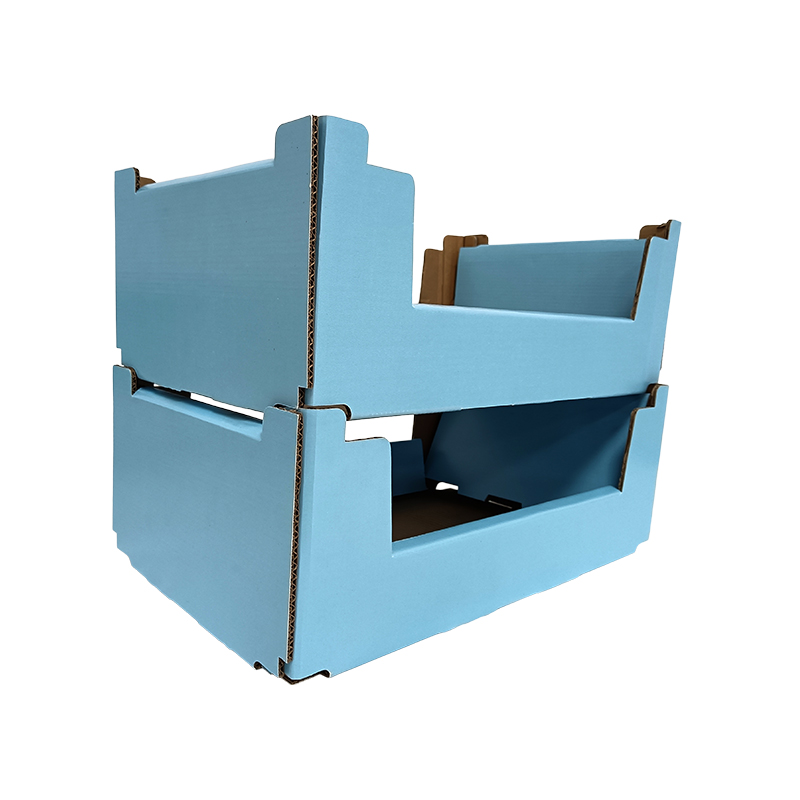
The first step in designing any successful PDQ is obtaining and strictly adhering to the retailer's physical constraints, particularly shelf depth and width modules.
The most frequent challenge is shelf depth. Most mainstream retailers utilize standard 18-inch or 24-inch deep shelving systems. The finished PDQ Display Boxes depth must be conservatively reduced (e.g., 17.5 inches for an 18-inch shelf) to allow for easy placement and avoid prohibited overhang, which is a major compliance issue. Furthermore, width must align with shelf modularity (typically increments of 6, 12, or 24 inches) to ensure the display can be positioned efficiently without wasting valuable shelf space. Guaranteeing Retail shelf dimension compliance for PDQ displays is a non-negotiable prerequisite for retail acceptance.
| Dimension Constraint | Standard Retail Fixture Size (Example) | Required PDQ Size Adjustment | Compliance Risk if Violated |
|---|---|---|---|
| Shelf Depth | 18.0 inches | Max 17.5 inches (Prevent Overhang) | Safety Hazard / Display Rejection |
| Shelf Height | Varies by Category (e.g., 15.0 inches) | Max 14.5 inches (Allow clearance) | Obstructed View / Non-placement |
| Shelf Width Module | 12.0 inches | Precise 11.75 inches (Fit neatly) | Wasted Shelf Space / Poor Visual Fit |
Optimization involves more than just fitting the space; it involves maximizing the visibility of the product and graphics within those constraints. This often requires adopting Shelf-ready packaging (SRP) sizing guidelines for mass merchants, where the outer carton quickly converts into the display tray with minimal labor. The design height should ensure the product is easily reachable while the header card remains above the product fill line to maintain branding. This strategic sizing is key to Optimizing PDQ display size for maximum retail visibility without exceeding the defined vertical limits.
Beyond standard shelving, PDQ Display Boxes must often integrate with specialized fixtures like endcaps or pegboard systems, each presenting unique dimensional challenges.
Endcaps and checkout aisles are premium retail spaces but come with the tightest restrictions. Endcaps often have a total shelf height lower than mainline aisles. Checkout zones, in particular, impose severe height caps to prevent obstruction of employee sightlines, security cameras, and advertising screens. Adherence to Corrugated display box height limitations for endcaps is critical, as a few centimeters of excess height can lead to non-placement in these high-value areas.
When the PDQ Display Boxes is designed to hang (e.g., on a slatwall or pegboard), the backer card must meet Standard retail display hook system compatibility requirements. This involves die-cutting holes that align perfectly with the standard 1-inch or 3-inch horizontal and vertical spacing of the retailer's peg systems. Furthermore, the structural design must ensure the corrugated material grade (e.g., E-flute or B-flute) and adhesive joints can support the full cantilevered weight of the product load, preventing tearing or bowing when integrated with Standard retail display hook system compatibility.
Dimensional accuracy in the final product is a manufacturing function of precision equipment and rigorous quality control.
To guarantee Retail shelf dimension compliance for PDQ displays, the die-cutting phase is critical. Using advanced flatbed or rotary die-cutting equipment ensures clean, consistent cuts and creases. Even a slight variation in the die-cut registration can make the final box unusable, particularly when trying to meet strict Shelf-ready packaging (SRP) sizing guidelines for mass merchants which demand geometric perfection for automated handling.
Suzhou New Century Color Printing Co., Ltd. maintains a sound management system (ISO9000) specifically to guarantee dimensional and structural consistency. Our full-process control ensures that raw material conversion, printing, and die-cutting all adhere to established tolerances, providing B2B buyers with the assurance that their PDQ Display Boxes will seamlessly integrate into retailer systems globally.
The successful launch of PDQ Display Boxes in mass retail is ultimately an exercise in compliance and strategic engineering. Maximizing sales velocity requires not only eye-catching graphics but also precise adherence to Retail shelf dimension compliance for PDQ displays and Corrugated display box height limitations for endcaps. By prioritizing dimensional accuracy and leveraging Shelf-ready packaging (SRP) sizing guidelines for mass merchants, B2B buyers ensure their products secure optimal placement and visibility.
PDQ Quick-Pack Environmentally Friendly Packaging Paper Box ... View More
Portable Cardboard PDQ Counter Display Box Tray is a special... View More
Tear-off Display Carton is a paper box with a special design... View More
Supermarkets directly display product display boxes, which i... View More
No. 88, Zhiying Street, High-tech Zone, Suzhou City, Jiangsu Province, China.
+(86)-512-6575-0991
+(86)-13776090470

Copyright © SuZhou New Century Color Printing Co., Ltd. Custom Printed Colored Corrugated Boxes





 Français
 Español
 عربى
عربى