
Article Directory
In the high-stakes environment of retail "Point of Purchase" (POP), the checkout counter represents the final opportunity to influence consumer behavior. PDQ display boxes (Pretty Darn Quick) are engineered precisely for this purpose—to be retail-ready, highly visible, and psychologically compelling. Suzhou New Century Color Printing Co., Ltd., established in 2000 and a governing unit of the Jiangsu Printing Industry Association, specializes in the technical integration of high-end color printing and corrugated structural integrity. With over 26,000 square meters of production space and GMI certification, we develop PDQ display boxes that serve as silent salesmen. This article explores the engineering and psychological mechanisms that allow custom corrugated PDQ trays to trigger impulse buys through optimized graphics and structural innovation.
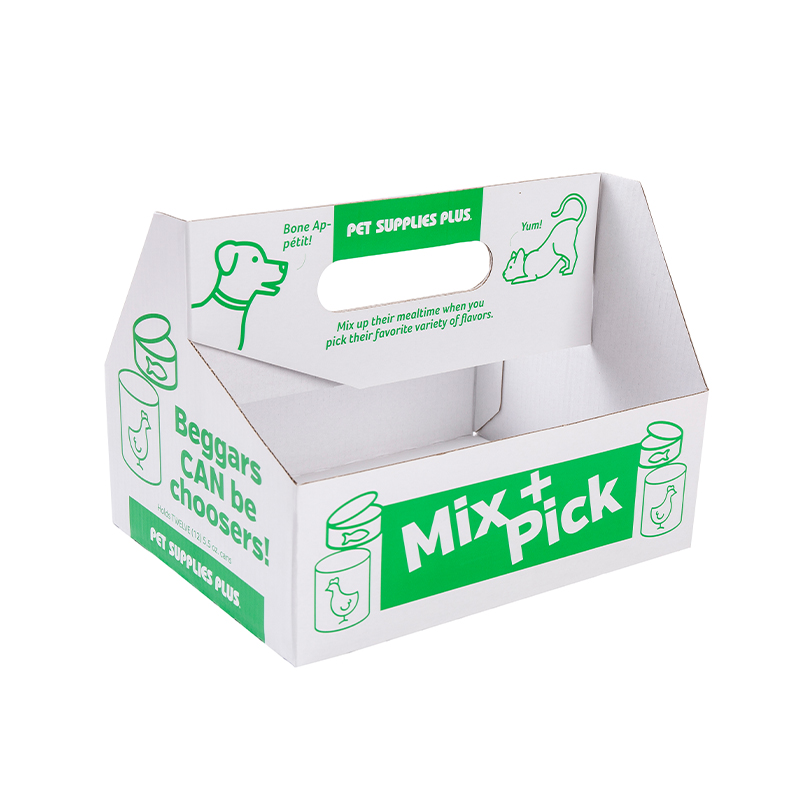
Impulse purchases are often driven by "Visual Salience"—the distinct physical properties that make an object stand out from its surroundings. Utilizing high-impact graphics for PDQ displays is not merely about bright colors; it is about "Chromatology" and contrast ratios that capture the eye in less than 0.5 seconds. For manufacturers, choosing colors for retail PDQ boxes involves matching brand equity with the physiological triggers of the target demographic. When comparing digital vs. offset printing for PDQ boxes, offset printing offers superior color depth and consistency for large-scale retail rollouts, while digital printing allows for hyper-localized versioning. At Suzhou New Century, our advanced printing equipment ensures that sustainable PDQ display box materials do not compromise on the vibrant finishes required to stop a shopper in their tracks.
| Graphic Feature | Standard Retail Packaging | Optimized PDQ Display Boxes |
| Visual Hierarchy | Information-heavy | Benefit-centric / Call-to-Action oriented |
| Color Consistency | Variable (Standard) | GMI-Certified Precision (Delta E < 2.0) |
| Consumer Engagement | Passive (On-shelf) | Active (Disruptive / "Grab-and-Go") |
The "Structural Design" of a countertop PDQ display for checkout must satisfy two conflicting requirements: it must be rugged enough for transit and sleek enough for high-end retail counters. Structural design tips for PDQ boxes focus on the ease of "tear-away" features that allow store associates to convert a shipping carton into a display tray in seconds. A stackable PDQ display box design utilizes specific flute profiles (typically E-flute or B-flute corrugated cardboard) to provide vertical compression strength while maintaining a slim aesthetic. By optimizing the PDQ tray dimensions for impulse items, engineers can maximize "Product Facing" visibility, ensuring that the item is presented at the optimal angle for the consumer's line of sight at the register.
Retailers favor PDQ display boxes because they minimize labor costs and standardize the look of the checkout lane. Understanding how to measure PDQ display ROI involves tracking the "Lift" in sales compared to standard shelf placement—often seeing increases of 20% to 40% for impulse goods like snacks, cosmetics, or small electronics. Retailer requirements for PDQ displays vary by store, often dictating specific footprint sizes and weight limits. Suzhou New Century maintains ISO9000 and ISO14000 certifications, ensuring that our recycled cardboard PDQ display boxes meet both the quality and social responsibility standards of global retail giants. Selecting PDQ boxes for seasonal promotions allows brands to implement "Differentiated Development," moving forward and retreating freely in the market to seek new growth points.
| Operational Metric | Loose On-Shelf Stocking | PDQ Display Box Implementation |
| Restocking Speed | 3 - 5 Minutes per SKU | Less than 30 Seconds (Drop-in) |
| Brand Control | Limited by shelf-share | Full control over localized branding environment |
| Waste Management | High (Individual primary boxes) | Low (Optimized secondary/tertiary corrugated) |
Effective graphics and structural design are the twin engines of a successful PDQ display boxes strategy. By combining high-precision color management with innovative corrugated engineering, brands can create an irresistible "impulse moment" at the checkout. Suzhou New Century Color Printing Co., Ltd. remains committed to our business philosophy of "keeping promises" and "continuous improvement." As we embark on our new round of development strategy, we invite global partners to establish cooperative relationships with us, leveraging our advanced technical force and geographical advantages in the Yangtze River Delta to create a better tomorrow for retail packaging.
Standard cartons are built solely for protection. PDQ display boxes are dual-purpose; they feature high-quality graphics and perforated sections that allow them to be converted instantly into retail-ready counter displays without additional tools.
Space at the checkout is extremely limited. Structural design ensures the display fits the specific "retail footprint" allowed by the store while ensuring the product is angled correctly to catch the consumer's gaze at waist or eye level.
GMI (Graphic Measures International) certification ensures that our printing process meets strict global standards for color accuracy. This means your brand colors will look identical across every retail location, which is vital for consumer trust and recognition.
Absolutely. By using multi-wall corrugated engineering and selecting the appropriate flute grade (like B-flute or BC-flute), custom corrugated PDQ trays can be designed to support high-density items while remaining 100% recyclable.
Most large retailers require PDQs to be "ship-in-display" (SID), meaning they must pass ISTA transit tests. They also often require specific dimensions (e.g., 14"x8") to fit standard checkout lane widths and tiered heights to prevent blocking the cashier's view.
Customizable Shapes Corrugated Paper Display Boxes & Car... View More
Chocolate Bar Box is a high-quality packaging display box de... View More
Matt Film Hot Stamping Aromatherapy Carton is made of high-q... View More
The portable corrugated boxes for pet food supply are made f... View More
No. 88, Zhiying Street, High-tech Zone, Suzhou City, Jiangsu Province, China.
+(86)-512-6575-0991
+(86)-13776090470

Copyright © SuZhou New Century Color Printing Co., Ltd. Custom Printed Colored Corrugated Boxes





 Français
 Español
 عربى
عربى