
Article Directory
In the competitive retail landscape, the visual integrity of a Printed Paper Carton for Daily Use serves as a direct reflection of brand quality. Achieving color consistency across millions of units is not merely an aesthetic requirement but a technical challenge involving substrate absorption, ink rheology, and advanced mechanical precision. Suzhou New Century Color Printing Co., Ltd., a governing unit of the Jiangsu Printing Industry Association, has been a leader in this field since 2000. Operating out of a 26,000-square-meter facility in the Suzhou National High-tech Industrial Development Zone, we utilize high-end printing equipment and rigorous management systems—including ISO9000, ISO14000, and GMI certification—to ensure excellence. For brands seeking eco-friendly custom paper cartons with uncompromising visual fidelity, understanding the engineering behind offset, flexographic, and digital printing is the first step toward successful mass production.
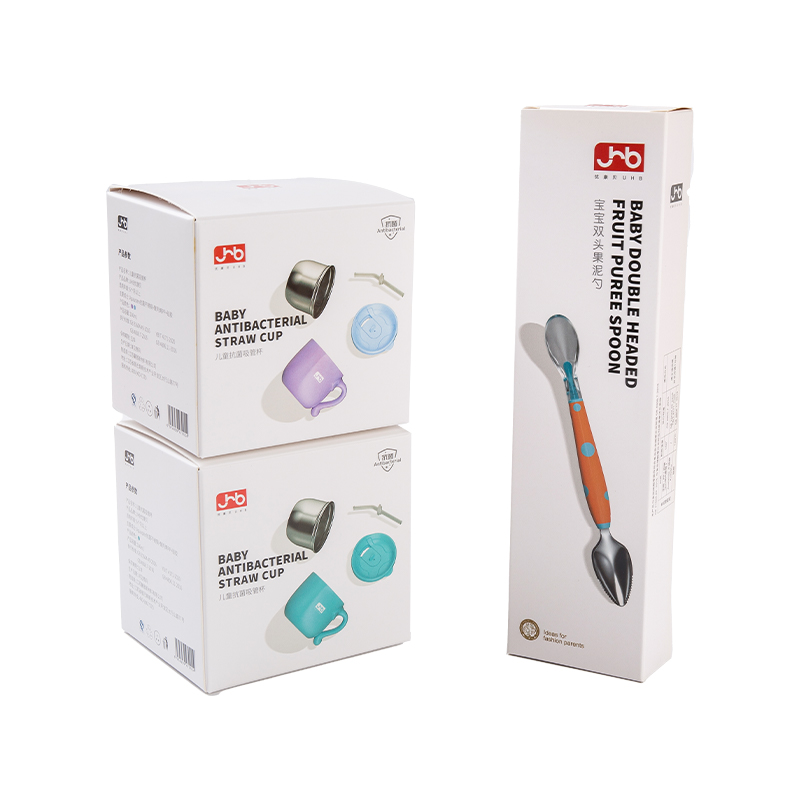
For high-volume production of a Printed Paper Carton for Daily Use, offset lithography remains the industry benchmark for color accuracy. This process involves the transfer of ink from a plate to a rubber blanket and finally to the paperboard. The primary technical advantage is the ability to maintain fine dot gain control, allowing for smooth gradients and sharp custom printed daily use carton design elements. While offset requires a higher initial setup cost, it offers the lowest per-unit cost for large runs and the most stable ink density control. At Suzhou New Century Color Printing, we leverage GMI-certified offset processes to ensure that the Delta E (color variance) remains within strict tolerances across different production batches.
Offset printing provides significantly higher image resolution and better color registration than standard flexography, though flexography is often preferred for simpler, high-speed corrugated applications.
| Technical Metric | Offset Lithography | Standard Flexography |
| Image Resolution | 175 - 300+ LPI (Lines Per Inch) | 65 - 150 LPI |
| Color Consistency | High (Fine ink film control) | Moderate (Anilox roll dependent) |
| Substrate Compatibility | Smooth Paperboard / Coated Stock | Corrugated box printing quality standards compatible |
When dealing with wholesale daily use paper cartons that require the structural integrity of corrugated material, modern high-definition (HD) flexography has bridged the gap with offset. By utilizing laser-engraved anilox rolls and specialized chambered doctor blade systems, manufacturers can achieve consistent ink transfer even on porous surfaces. This is essential when the goal is to maintain corrugated box printing quality standards while minimizing environmental impact. Suzhou New Century Color Printing emphasizes "full process control," ensuring that the mechanical pressure of the flexo plates does not crush the fluting of the Printed Paper Carton for Daily Use, which would otherwise lead to color mottling and structural weakness.
While offset and flexo dominate mass production, digital printing has revolutionized the custom printed daily use carton design phase. Digital presses eliminate the need for plates, allowing for "on-the-fly" color adjustments. While it cannot yet match the cost-efficiency of offset for millions of units, it offers unmatched consistency for localized marketing campaigns or seasonal variants. By integrating digital proofing with our mass-production lines, we ensure that the initial color profile is mathematically mapped to the final industrial run, reducing the "dilemma caused by rising raw material prices" through the reduction of setup waste.
Digital printing excels in rapid turnaround and customization, whereas analog systems (Offset/Flexo) offer superior ink durability and lower costs for high-volume daily necessities packaging.
| Performance Factor | Digital Printing | Analog (Offset/Flexo) |
| Setup Time | Near Zero | High (Plate creation required) |
| Pantone Matching | Simulated (CMYK+ Extended Gamut) | Direct (Spot Color Inks) |
| Scalability | Best for < 500 units | Best for 10,000+ units |
The engineering of a Printed Paper Carton for Daily Use is not complete without considering the paper's surface energy and whiteness. Different coatings—ranging from clay-coated newsback (CCNB) to solid bleached sulfate (SBS)—interact differently with ink. A high "whiteness" index allows for more vibrant color reproduction, while recyclable paper carton printing often involves unbleached kraft, which shifts colors toward a warmer spectrum. Suzhou New Century manages this through rigorous "full participation and full process control," adjusting our ink formulations to compensate for the specific absorption rates of the sustainable daily use carton materials chosen by our high-quality customers.
Selecting the right printing technique is a balance of volume, material, and required precision. For a mass-produced Printed Paper Carton for Daily Use, offset lithography paired with rigorous GMI and ISO quality management remains the superior choice for color consistency. Suzhou New Century Color Printing Co., Ltd. continues to implement a "differentiated development" strategy, combining advanced equipment with a pragmatic business philosophy. By focusing on quality as our cornerstone and serving customers with honesty, we ensure that every carton—from the first to the millionth—meets the highest standards of the industry.
GMI (Graphic Measures International) certification ensures that a printer meets strict color management and quality control standards. It guarantees that the colors on your wholesale daily use paper cartons remain consistent across different production runs and geographical locations.
Yes. By using high-quality vegetable-based inks and specific coatings on recyclable paper carton printing substrates, we can achieve a wide color gamut that is both visually striking and environmentally responsible.
We use UV-resistant inks and protective aqueous or UV coatings. These coatings not only prevent fading from light exposure but also protect the Printed Paper Carton for Daily Use from scuffing during transportation.
We follow ISO9000 quality management and ISO14000 environmental standards, alongside specific barcode printing qualifications and export general commodity packaging licenses to ensure every box is fit for international markets.
Generally, no. For high volumes, offset or flexographic printing is more economical. Digital printing is best utilized for prototypes, short-run custom printed daily use carton design, or personalized marketing campaigns.
Partial UV Foil Stamping Window Carton is a sophisticated an... View More
Hamburger Food Packaging Box, referred to as hamburger box, ... View More
Printed Colorful Candy Packaging Carton Box is a high-qualit... View More
Printed PP retail product packaging boxes are a high-quality... View More
No. 88, Zhiying Street, High-tech Zone, Suzhou City, Jiangsu Province, China.
+(86)-512-6575-0991
+(86)-13776090470

Copyright © SuZhou New Century Color Printing Co., Ltd. Custom Printed Colored Corrugated Boxes





 Français
 Español
 عربى
عربى