Suzhou New Century Color Printing Co., Ltd., established in February 2000, is a premier manufacturing enterprise specializing in high-fidelity color printing and corrugated solutions. Situated in the Suzhou National High-tech Industrial Development Zone, our 26,000-square-meter facility is equipped with advanced GMI-certified printing technology and integrated ISO9000/ISO14000 management systems. As a governing unit of the Jiangsu Printing Industry Association, we specialize in the R&D and production of PDQ Display Boxes. By leveraging 230+ technical professionals and high-precision structural design, we provide retail-ready packaging solutions that optimize point-of-sale efficiency and brand visibility for a global clientele.
Mechanical Properties and Load-Bearing Structural Design
- 1. Corrugation Profile Selection: The structural integrity of PDQ Display Boxes depends on the flute selection. We typically utilize B-flute or E-flute corrugated board to balance compression strength with a high-quality printing surface. Determining which flute type is best for retail PDQ displays involves calculating the Edge Crush Test (ECT) value required for safe stacking and transit.
- 2. Load Distribution Engineering: To prevent sagging under high-density products, we implement custom internal dividers. How to calculate load-bearing capacity for PDQ trays requires assessing the basis weight of the linerboard (typically 175g-250g) to ensure the display remains rigid throughout the product lifecycle.
- 3. Anti-Collapsing Features: By utilizing reinforced corrugated structures for PDQ boxes, our designs incorporate double-walled front panels and side supports. This technical precision mitigates structural fatigue caused by repeated consumer interaction at the shelf edge.
Retail Compliance and Point-of-Sale Efficiency Parameters
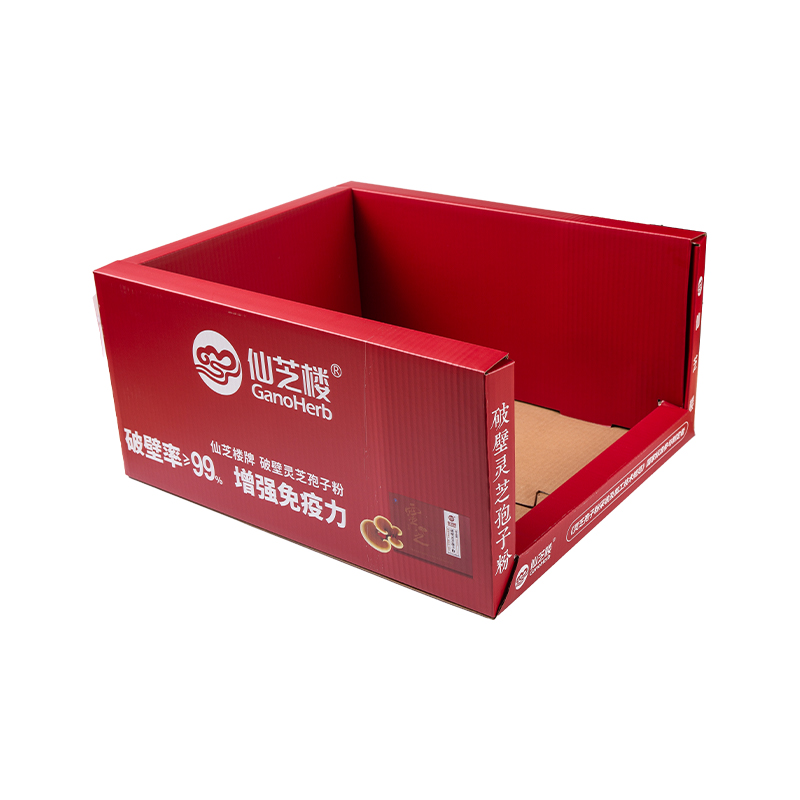
- 1. Fulfillment Speed: The "Pretty Darn Quick" nomenclature refers to the ease of deployment. Standard PDQ tray dimensions for major retailers must strictly adhere to modular pallet footprints (e.g., 1/4 or 1/2 pallet) to minimize labor costs during the restocking process.
- 2. Aperture and Accessibility: An effective display requires a specific "lip" height. Why PDQ tray front lip height matters for visibility is a matter of balancing product security with the "easy-to-grab" ergonomics that drive impulse purchases.
- 3. Perforation Engineering: We utilize high-precision die-cutting to ensure clean tear lines. Optimizing perforation patterns for retail-ready packaging prevents ragged edges that degrade brand perception and ensures the transition from shipping container to display tray is seamless.
Comparative Analysis of Material Coating and Print Quality
In a competitive retail environment, the visual "pop" of a display is dictated by the interaction between ink absorption and surface coating.
| Technical Parameter |
Standard Flexo Printing |
SGR High-End Offset Printing |
| Color Accuracy (Delta-E) |
< 5.0 |
< 2.0 (GMI Certified) |
| Surface Finish (Gloss Units) |
15-20 GU |
> 60 GU (UV Coating) |
| Screen Ruling (LPI) |
65 - 85 LPI |
150 - 175 LPI |
| Ink Adhesion (ASTM D3359) |
Grade 3B |
Grade 5B |
Psychological Drivers and Impulse Conversion Optimization
- 1. Chromatic Contrast and Visual Weight: Utilizing high-fidelity color printing for impulse buy PDQs allows brands to create a focal point. We implement UV varnishing or aqueous coatings to enhance the saturation of the primary brand colors, increasing the "stop rate" in high-traffic aisles.
- 2. Graphic Hierarchy and Messaging: Effective PDQ Display Boxes use the "header" real estate for a single, powerful value proposition. Optimizing PDQ header design for impulse sales involves positioning key benefits at the 1.5-meter eye-level average.
- 3. Secondary Placement Strategy: Small-footprint countertop PDQ display box customization allows for placement in high-conversion zones like the checkout lane. This strategy utilizes "dead space" to trigger last-minute purchase decisions.
- 4. Material Sustainability: Complying with ISO14000, we prioritize recyclable corrugated materials for eco-friendly PDQs. Consumers increasingly favor brands that utilize soy-based inks and FSC-certified paperboard, which subtly influences purchase intent.
Quality Verification and Technical Standards
- 1. GMI Color Management: As a GMI-certified printer, Suzhou New Century ensures that every batch of PDQ Display Boxes matches the global brand standards across different production runs.
- 2. Environmental Stress Testing: We conduct humidity resistance testing for corrugated displays to ensure that the fiber integrity remains stable in refrigerated or high-humidity retail environments, preventing the "tilting" effect.
Hardcore Technical FAQ
- What is the difference between a PDQ and a SRP (Shelf Ready Packaging)? A PDQ is generally more focused on high-impact graphics and promotional placement, while SRP is a broader term for any shipping container that converts into a retail display.
- Can PDQ boxes be reused? While designed for single-use lifecycles to maintain maximum visual appeal, the high ECT-rated corrugated board we use can often survive two or three replenishment cycles.
- Does Suzhou New Century provide structural prototypes? Yes, we use CAD-based sample cutting to provide physical white samples for fit-testing and digital 3D renderings for graphic approval.
- How do you prevent the display from sliding on polished shelves? We can incorporate high-friction coating treatments or rubberized "feet" on the base of the tray for lightweight products that might shift during consumer selection.
- What is the typical lead time for custom PDQ production? Following design approval, mass production typically ranges from 10 to 15 days, depending on the complexity of the die-cutting and finishing requirements.
Technical References
- ISO 12647-2: Graphic technology — Process control for the production of half-tone colour separations.
- ASTM D5276: Standard Test Method for Drop Test of Loaded Containers by Free Fall.
- TAPPI T 811: Edgewise compressive strength of corrugated fiberboard (short column test).









 Français
 Español
 عربى
عربى