
Article Directory
Food packaging cartons balance product protection, printing quality, and convenience by matching board grade, flute profile, coating, ink system, and crease geometry to the food's weight, moisture, stacking load, and opening scenario. A carton that wins on print but collapses under a 1.2-meter stack is not a good carton, and neither is a crush-proof box that takes ten seconds to assemble at the counter.
Brand teams that want to understand where packaging fits into the wider food supply picture will find a practical starting point in our industry review food packaging carton boxes: the unsung heroes of modern consumer goods.
Protection is decided by board thickness, flute geometry, and crease pattern before printing begins.
A carton fails by flat crushing under stacking, by corner bulge during palletized transit, or by moisture softening in the cold chain, and each failure mode points to a different substrate. The most common error is treating all paper boxes as interchangeable. A 350-gram white-card carton protects a 250-gram chocolate bar well but performs poorly for a 1.2-kilogram frozen pie, so the structural decision must follow product weight, moisture level, stacking height, and handling path.
| Structure | Typical thickness | Best suited for | Main protection limit |
| 350 gsm white card | 0.45 mm | Confectionery, bakery, tea | Low crush resistance under tall stacks |
| 400 gsm white card | 0.52 mm | Frozen meals, heavier dry goods | Limited impact absorption |
| E-flute micro-corrugated | 1.5 mm | Pastry, takeaway, pizza | Less rigid for very heavy loads |
| B-flute corrugated | 2.5 mm | Multipacks, e-commerce shipments | Bulky, and fine print detail drops |
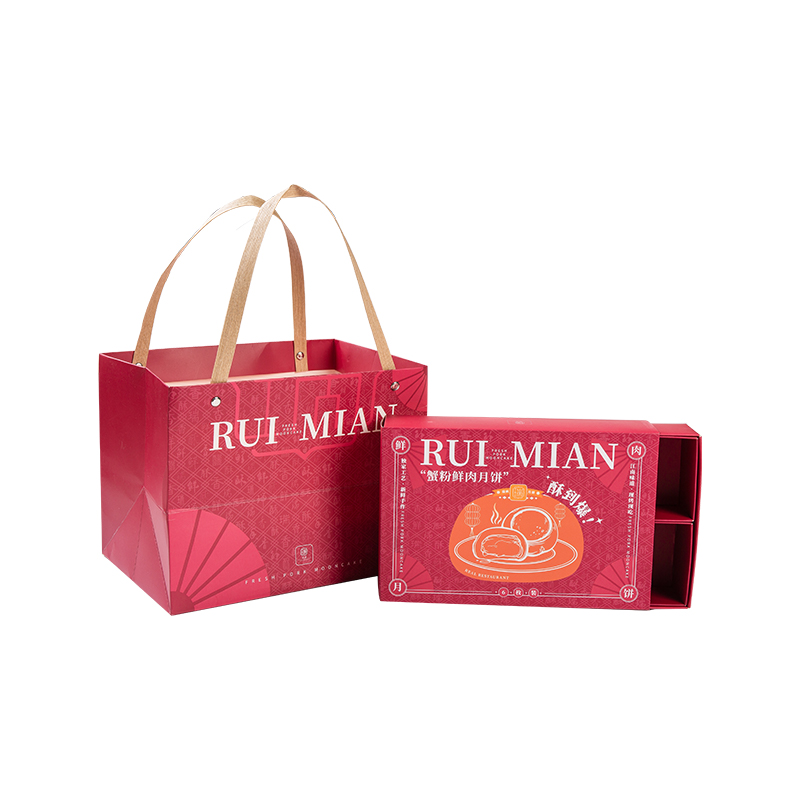 Customizable Fast-Folding Food Packaging Cartons with Color OptionsThis carton line addresses substrate selection for varied product weights and moisture levels, offering fast-folding designs that maintain printing quality and structural integrity for food packaging.View Product →
Printing quality on food cartons is the visible result of a controlled chain: substrate smoothness, ink system, press stability, and finishing sequence. Food carton printing leaves little room for error, because the image sits next to a product the consumer inspects before purchase.
Offset printing on coated card holds 150 to 175 lpi line screens, which reproduces realistic food photography. The real test is repeatability: when packaging is ordered in batches, the color difference between runs must stay within a Delta E of 2.0, or consumers notice the shift on the shelf. Finishing then decides the tactile result. Matte film with spot UV gives premium bakery packaging a soft-touch surface with crisp highlights; nano UV and reverse UV add gloss and scuff resistance for cartons that travel through cold chains. Producers working with Suzhou New Century Color Printing Co., Ltd. gain access to a seven-color KBA offset press with inline color control at the company's 26,000-square-meter plant in Suzhou National High-Tech Industrial Development Zone.
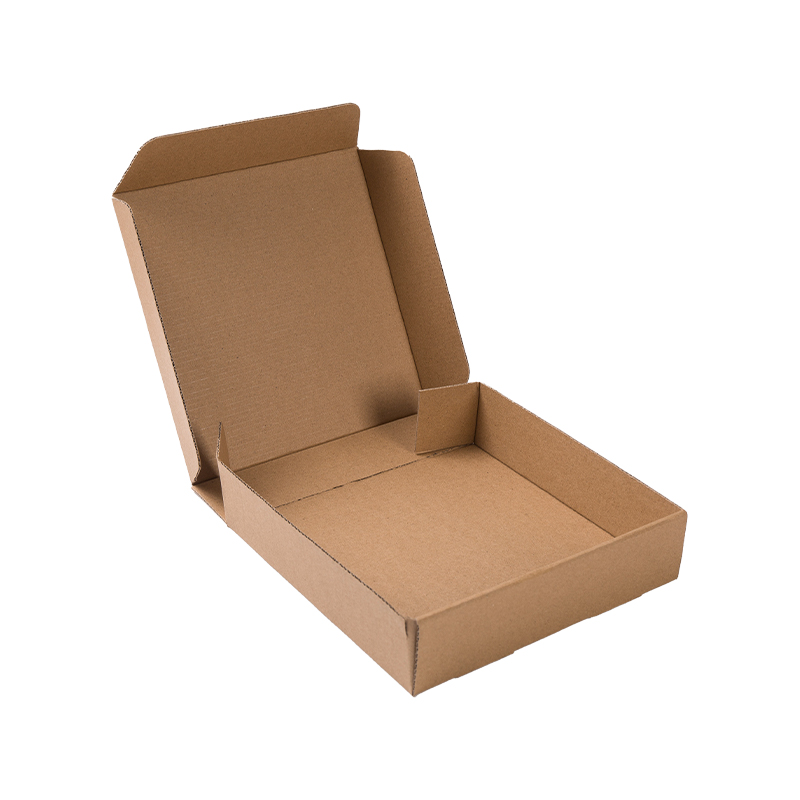 Pizza Foldable Corrugated Packaging Carton with Handles and DividersDesigned for pizza transport, this corrugated box folds flat for storage, erects quickly for filling, and includes divider slots and a handle pocket for easy carrying and presentation.View Product →
Convenience is a structural feature, not an afterthought. A food carton's entire life cycle, from flat storage before filling to rapid erection on the line and easy opening by the consumer, depends on where the crease lines and perforations are placed.
Fast-food operators measure every second of assembly. A self-locking carton with an auto-bottom erects in two to three seconds, while a carton that requires folding and tucking four flaps takes eight to ten. On a line packing 60 units per minute, that difference decides whether the line runs with one packer or needs an extra operator.
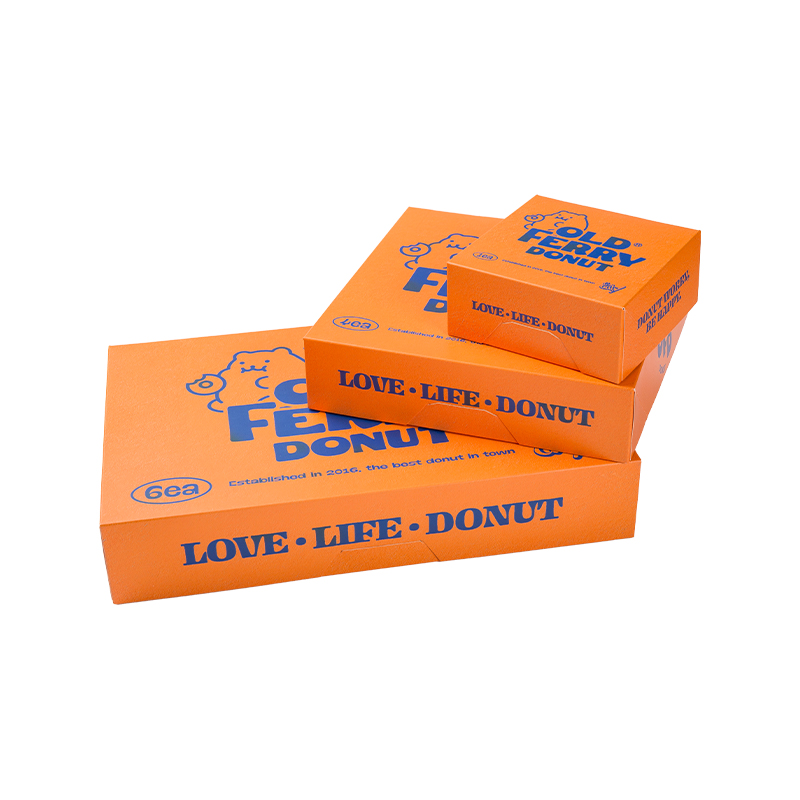 Hamburger Paper Boxes in Various Sizes and Shapes with Custom BrandingThese food-grade, PE-coated hamburger boxes are engineered for rapid assembly on fast-paced lines, with printable surfaces for logos to enhance brand recognition during service.View Product →
The same die-cut engineering handles hamburger clamshells, pizza corrugated boxes, and multi-pack carriers across the full carton range at Suzhou New Century Color Printing Co., Ltd.
There is no universal balanced carton; there is only the correct balance for a specific food, distribution route, and retail format. The practical sequence is to define the threat list first, then the print brief, then the assembly constraint.
| Food category | Recommended structure | Primary trade-off |
| Fresh bakery and pastry | E-flute micro-corrugated at 1.5 mm | Crush resistance vs. fine print detail |
| Takeaway burgers and pizza | Grease-resistant white card or corrugated | Moisture barrier vs. recyclability |
| Chocolate and confectionery | 300-350 gsm white card with nano UV | Premium finish vs. unit cost |
| Frozen prepared meals | B-flute corrugated with moisture coating | Thermal protection vs. flat storage |
For burgers, wraps, and fried food, use grease-resistant coated white card or single-wall corrugated board. The coating stops oil migration, and the flute profile insulates heat without transferring it to the consumer's hand.
Yes, with defined limits. Direct printing on corrugated usually runs at 85 to 110 lpi, which suits logos and flat colors. When photographic reproduction is needed, specify a litho-laminated label or an E-flute carton that bridges the gap between corrugated strength and coated-card print finish.
Finishing changes friction, stiffness, and opening behavior. A heavy matte film can stiffen a flap and slow tucking, while a spot UV layer can make a tear strip slippery. Finishing and structure should be validated together during the prototype stage.
Moist and greasy products push the structure toward coated boards and water-based barrier coatings. A PE-free barrier coating keeps the carton rigid and recyclable while preventing soggy panels and oil wicking on the outer print.
Printed Colorful Candy Packaging Carton Box is a high-qualit... View More
Printed PP retail product packaging boxes are a high-quality... View More
Offset Printing Designs Cartons Packaging Boxes Folding Cart... View More
Partial UV Foil Stamping Window Carton is a sophisticated an... View More
No. 88, Zhiying Street, High-tech Zone, Suzhou City, Jiangsu Province, China.
+(86)-512-6575-0991
+(86)-13776090470

Copyright © SuZhou New Century Color Printing Co., Ltd. Custom Printed Colored Corrugated Boxes





 Français
 Español
 عربى