
Article Directory
Retail packaging costs can consume 10 to 20 percent of a brand's total production spending, and for companies selling through supermarkets and e-commerce channels, that percentage continues to rise. The cost is rarely a single line item. It is the product of how the blank is designed, which substrate is chosen, how the print press is scheduled, and how the finished box moves from the factory to the shelf.
Retail packaging cost is the sum of four distinct levers, and each lever behaves differently when you apply pressure. Understanding these levers is the first step before negotiating with any packaging supplier.
Material and board account for nearly half of total packaging cost. Structure and logistics are smaller line items, but they are the fastest to act on.
Structure determines the blank size, the amount of die-cut waste, and whether a box can stack efficiently in a container. A well-designed blank can reduce material usage without reducing protection or shelf appeal.
Substrate is the physical material that carries the brand and protects the product. It is also the biggest line item. Moving from a heavy coated board to a lighter board or a corrugated structure is a category-level change.
Printing and finishing add the brand's face to the box. High-end effects such as hot foil stamping, spot UV, and nano reverse UV are attractive, but they add cost per thousand units. The longest-run savings often come from reducing the number of finishes on a single packaging design.
Dimensional weight is the hidden cost in retail packaging. An out-of-proportion product box can double the freight cost for a single SKU, especially in e-commerce and store delivery lanes.
The fastest way to reduce packaging cost is to simplify the blank before anyone talks about material.
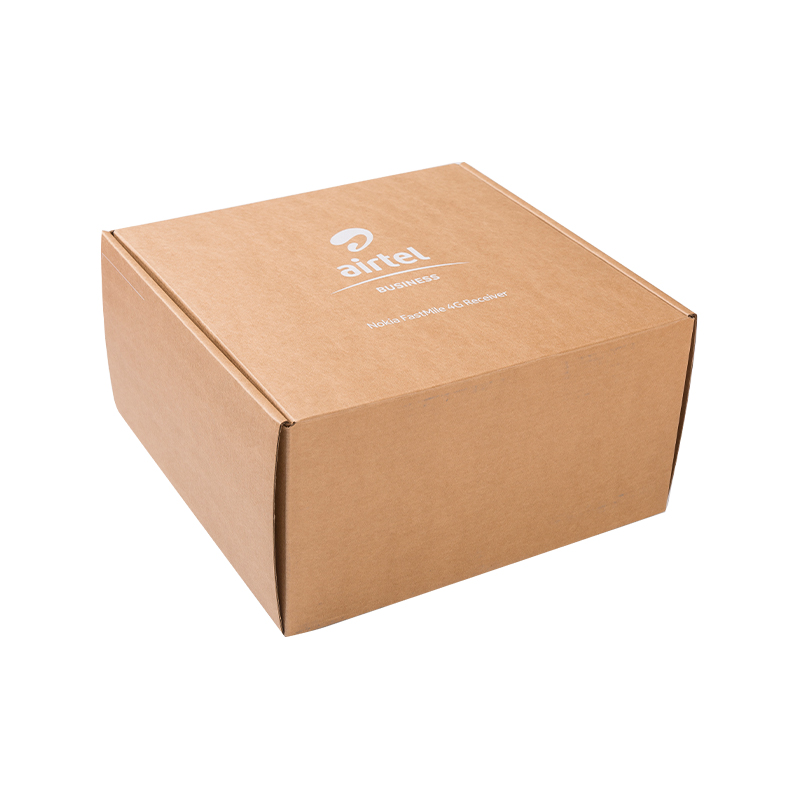 Folding Carton Packaging with Offset Printing for Diverse IndustriesThis folding carton uses offset printing for accurate color reproduction and durable materials, suitable for food, cosmetics, and electronics. Its customizable design can reduce blank area, directly saving material costs.View Product →
Blank area is the square footage of paperboard required to produce one finished box. Every 5 percent reduction in blank area is a direct 5 percent saving in material spend.
At SuZhou New Century Color Printing Co., Ltd., offset printing cartons are customized to the exact product dimensions, and the structural engineering team can help brands reduce blank area while preserving strength.
Substituting high-cost paperboard with a lighter, structurally correct material is the single largest material saving available.
For products that need extra durability, an E-flute corrugated board often outperforms a heavy paperboard carton at a lower cost per thousand units. The key is to match the board to the product weight and shelf life requirements, not to the packaging aesthetic alone. Read our complete guide to ECT, HSC, BCT and flute selection to understand how board strength is measured and why a lighter flute can be the right choice.
| Material | Cost per 1,000 units | Weight per 1,000 units | Typical use |
| 350g white card, matte film | $425 | 350 kg | Folded cartons |
| E-flute corrugated, printed | $315 | 450 kg | Shipping and storage boxes |
| B-flute corrugated, printed | $385 | 580 kg | Heavy products and industrial |
| 350g white card, PET window | $515 | 365 kg | Food and cosmetic display |
ECT is the standard measure for corrugated board stacking strength. A lower flute can replace a heavier paperboard when the product is not top-loaded, saving both material and freight.
The cheapest box is still expensive if it wastes warehouse space and generates dimensional weight surcharges.
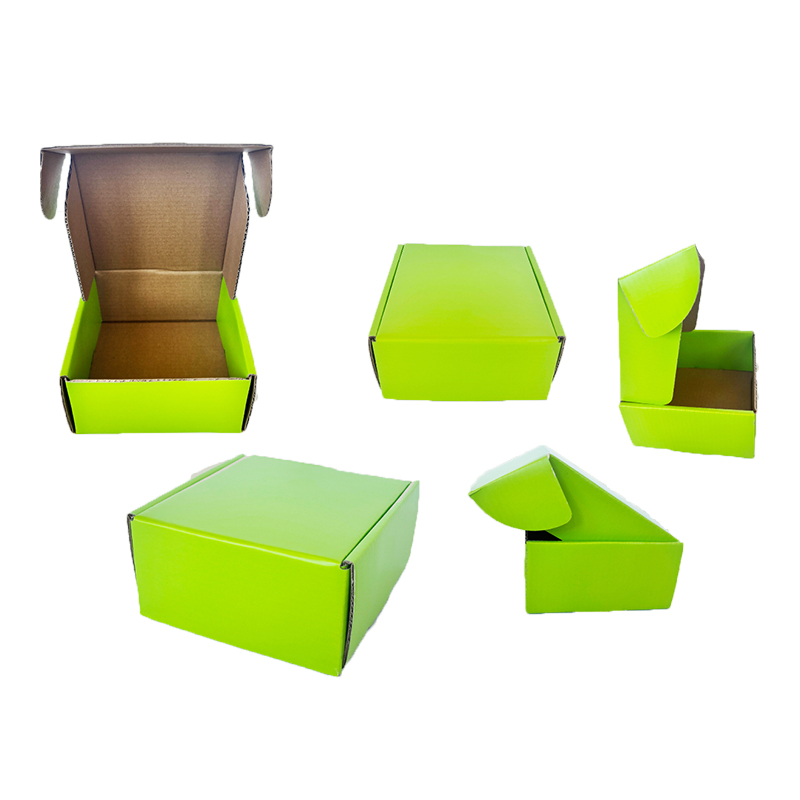 Corrugated Airplane Mailer Box for Lightweight E-Commerce ShippingThis self-locking corrugated box is designed for e-commerce, with a lightweight structure that lowers dimensional weight charges. It folds flat to save warehouse space and is fully recyclable.View Product →
E-commerce shipping rates are calculated on dimensional weight, not actual weight. A box that is 20 percent too big can raise the billable weight by up to 20 percent. Using an e-commerce mailer box that folds flat saves storage space and reduces the cube during shipment.
Retail display is the other side of the same coin. A tear-fold PDQ tote carton can replace both a shipping box and a display tray, letting the store place the product on the shelf without removing it from the packaging, and reducing handling labor at the store level.
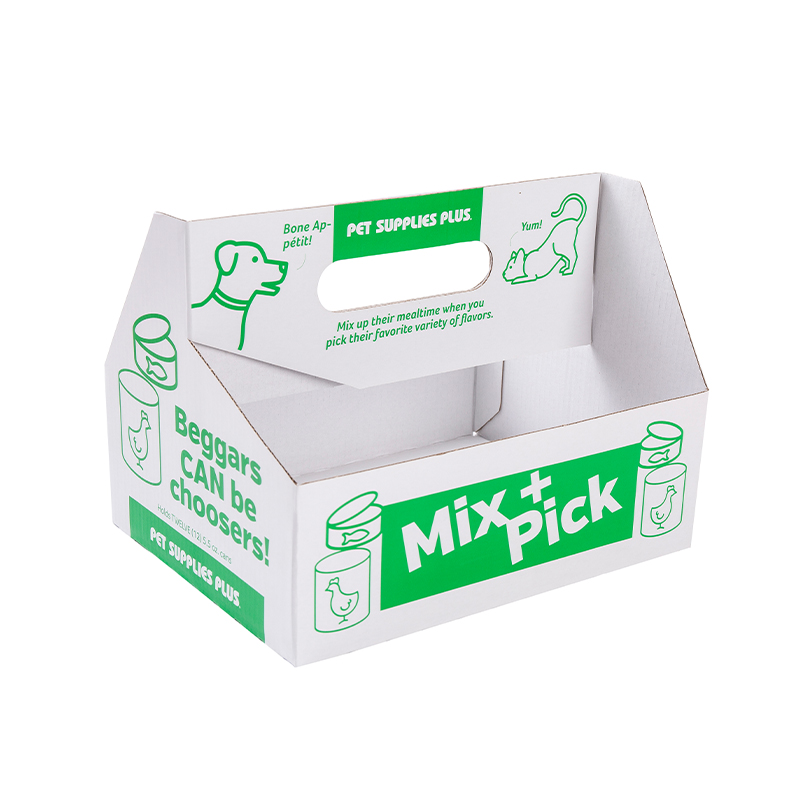 Tear-Off Foldable PDQ Tote Carton for Retail Display and TransportThis collapsible PDQ carton combines shipping and display functions with a tear-off design for easy shelf access. It reduces handling labor and optimizes storage, addressing fulfillment cost concerns.View Product →
Across the packaging value chain, fulfillment-related costs typically represent 10 to 15 percent more than the box itself. A packaging partner that designs for the whole chain, not just the print quality, is the most reliable cost lever.
A dedicated packaging cost audit typically returns 12 to 20 percent in total savings without altering the product or the brand.
The chart below shows where those savings are concentrated. Material substitution and logistics consolidation are the two largest levers in a packaging portfolio.
The same audit can also identify quick wins such as standardizing carton sizes across multiple SKUs and moving from individual packaging to multi-pack formats where shelf presence still holds.
In our experience with retail brands across consumer products, food, and electronics, a structured redesign typically returns 12 to 20 percent in total packaging cost savings. The exact number depends on how far the current design is from a right-sized package.
Not always. Lighter packaging saves freight, but the package still needs to protect the product. The right approach is to match the board grade and flute type to the product's weight and distribution environment, rather than making a blanket change to lighter material.
No. Many high-impact brand effects, including tactile matte film and spot UV, can be applied selectively to a smaller area of the box. The key is to prioritize the finish that matters most to the consumer and drop the ones with minimal marketing returns.
Once a design is confirmed, a new die-cut tool typically takes 7 to 10 days, and a production order of 10,000 units can be completed in 10 to 15 days. SuZhou New Century Color Printing Co., Ltd. can coordinate structural design, printing, and finishing in one production line.
Adult product packaging boxes are designed to meet a variety... View More
Gift tag retail packaging box carton with hanging hole and t... View More
Printed PP retail product packaging boxes are a high-quality... View More
Our custom designed home appliance packaging cartons provide... View More
No. 88, Zhiying Street, High-tech Zone, Suzhou City, Jiangsu Province, China.
+(86)-512-6575-0991
+(86)-13776090470

Copyright © SuZhou New Century Color Printing Co., Ltd. Custom Printed Colored Corrugated Boxes





 Français
 Español
 عربى
عربى