
Article Directory
On a busy retail pegboard, a hanging box has one job: stay on the hook, hold the product, and keep looking shelf-fresh. The failure is rarely dramatic. It starts as a hairline crack beside the hang hole, then a flap that refuses to lock, then a printed surface that scuffs against the carton next to it. By the time a merchandiser notices, the product is on the floor and the box is in the bin. Most of these failures trace back to decisions made before the blank reaches the printing press: the board grade, the die-cut geometry, and the surface finish. SuZhou New Century Color Printing Co., Ltd. has produced thousands of retail cartons, and this guide documents the problems that show up most often on hanging boxes and the fixes that actually work.
A hanging box fails in one of four zones: the hang hole, the locking flap, the crease line, or the finish surface.
The hang hole carries the entire load. For a 350g product hanging on a 6mm Euro slot, the point-contact stress can exceed the board edge-tear strength within days. The locking flap decides whether the box stays closed in transit and on the peg. A weak tuck-in flap opens when the retailer re-stocks or when a customer lifts the box off the hook. The crease line determines how cleanly the box folds; when the crease runs against the paper grain, the outer liner cracks at the corner and the box loses its squareness. The finish surface handles friction from neighboring boxes; without a protective coating, ink rubs off and the front panel looks unsold.
The six most common defects in hanging box packaging are hole tearing, flap pop-open, crease cracking, die-cut drift, print scuffing, and hook mismatch.
| Problem | Root Cause | Corrective Action |
| Hole tearing | Board basis weight too low; hole too close to the top edge | Use 350-400g white card; reinforce with a PP hanger |
| Flap pop-open | Missing lock tab; flap too short | Add a tuck lock tab; increase flap depth |
| Crease cracking | Score direction opposes paper grain | Match crease to grain; use a 1.0-1.2mm crease rule |
| Die-cut drift | Worn die board; poor registration | Inspect inline; run periodic die checks |
| Print scuffing | No protective varnish or film | Apply matte film or nano UV coating |
| Hook mismatch | Hole does not match retailer peg spec | Confirm Euro slot or sombrero dimensions |
Reinforce the hang hole by increasing board caliper, adding a folded hanger flap, or laminating a PP patch inside the box.
The simplest fix is thickness. Moving from 300g to 350g white card raises edge-tear resistance by roughly 25 to 30 percent in most domestic board grades. The second fix is geometry. A Euro slot placed 8mm from the top edge spreads stress across more fibers than a slot placed 4mm from the edge. The third fix is reinforcement. A self-adhesive PP hang hole section can be applied to the inside of the panel so the hook never touches the raw board.
 Durable Polypropylene Retail Box with Printed Hang Hole DesignThis printed PP box offers moisture resistance and a load capacity of 5-10 kg, making it suitable for displaying food, cosmetics, or electronics. Its reinforced hang hole helps maintain stability on retail pegs.View Product →
Hold the die-cut tolerance on a hanging box within 0.5mm; when the hang hole drifts past 1mm, the carton will not sit flush on the peg and the product can slide out.
Die-cut drift has two sources: a worn blade and inconsistent press registration. On a short run, drift may not matter. On a 50,000-carton order, a 0.8mm shift across the hole and the flap means thousands of boxes that do not close. The fix is a hard die board that is kept clean and re-sharpened on a schedule, plus inline inspection at the die-cutter using a photoelectric registration sensor.
The most reliable hanging box for mid-weight retail products is a 350g white card carton with a reverse tuck flap and a reinforced Euro slot.
| Board | Basis Weight | Hole Strength | Best For |
| White card | 300g | Moderate | Items up to 250g |
| White card | 350g | Good | Standard retail products |
| White card plus PP hole | 350g | Excellent | Heavy pegged items |
| E-flute corrugated | 400g plus | Good | Large or fragile goods |
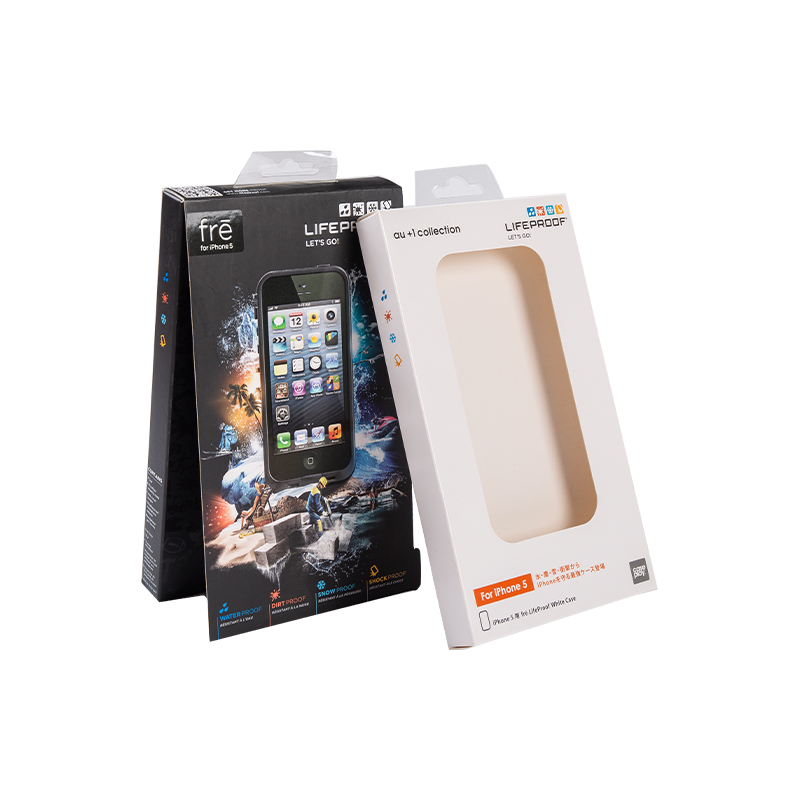
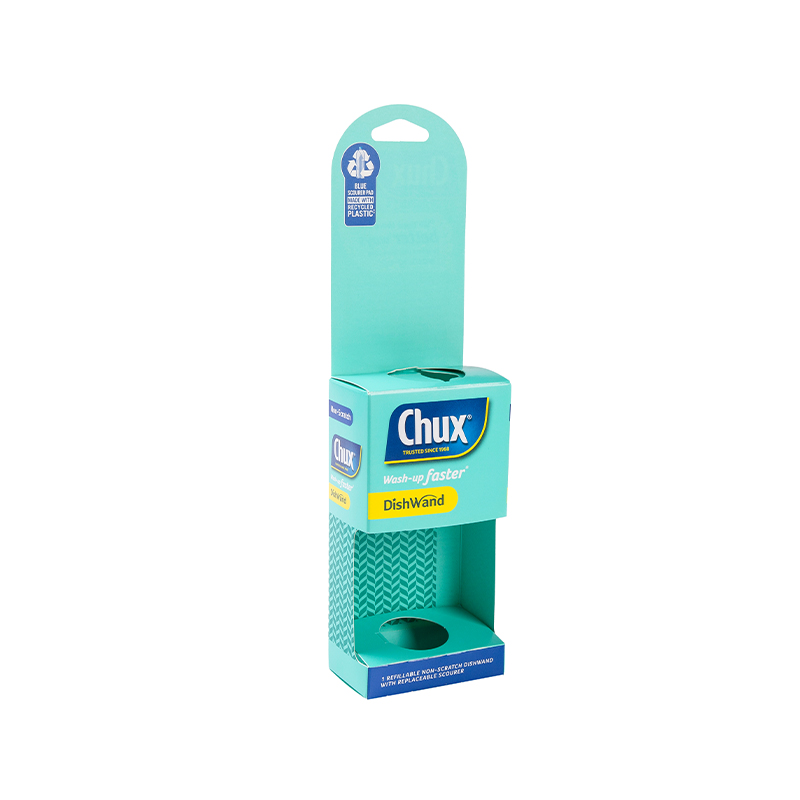 Cardboard Retail Box with Hang Hole and Clear PVC WindowThis 350g cardboard box includes a Euro slot and a transparent window, allowing customers to see the product. It is an appealing choice for gift display and helps prevent scuffing on pegboards.View Product →
A matte film or nano UV coating is the only reliable way to stop scuffing on a hanging box that sits on a pegboard for weeks.
Offset printing on white card produces sharp color, but the ink sits on the surface. In a display environment, cartons slide against each other, and a rub test will show ink transfer. A matte film adds a tough layer and a soft-touch feel. Nano UV offers higher abrasion resistance and a frosted, premium look. The direction of the board also matters: the print should run in the same direction as the grain when the box is scored, because the ink film stretches at the fold if the grain is wrong.
Run four tests before mass production: the 48-hour hook-hold test, flap cycle, crease fold, and rub resistance.
As an experienced packaging manufacturer, SuZhou New Century Color Printing Co., Ltd. runs these checks on every hanging box order and provides a written report. If you have a retail carton that is failing on the peg, start with the board grade and the hang hole geometry, because those two variables cause most failure modes.
For most retail products under 300g, a 350g white card is the safe starting point. Lighter weights tear at the hang hole; heavier weights raise cost without adding value unless the product is fragile.
The hole tears when the board is too thin, the slot is too close to the top edge, or the hole shape concentrates all the load on a single point. Increase the board caliper, move the slot further from the edge, or add a PP reinforcement patch.
Yes. E-flute or B-flute corrugated with a printed and laminated liner is a strong choice for heavier items. Match the flute direction to the vertical load path so the hanging box does not sag.
Ask for a crease and die-cut sample, the board grade and basis weight, the coating specification, and a hook-hold test report. SuZhou New Century Color Printing Co., Ltd. can run these tests and provide a written report before volume production.
Gift tag retail packaging box carton with hanging hole and t... View More
Printed PP retail product packaging boxes are a high-quality... View More
The outer packaging box is designed for blind boxes, prize r... View More
Various Floral Tea and Tea Industry Drawer Packaging Cartons... View More
No. 88, Zhiying Street, High-tech Zone, Suzhou City, Jiangsu Province, China.
+(86)-512-6575-0991
+(86)-13776090470

Copyright © SuZhou New Century Color Printing Co., Ltd. Custom Printed Colored Corrugated Boxes





 Français
 Español
 عربى
عربى