
Article Directory
PDQ Display Boxes (Product Dispensing Quick) are an essential component of modern retail merchandising, serving as silent salespeople at the point of purchase. Their primary function is two-fold: to drive impulse buys through high-impact graphics and to safely and reliably present products to the consumer. For B2B procurement and wholesale buyers, the critical challenge lies in precisely balancing structural integrity, print quality, cost-effectiveness, and increasing sustainability mandates. A slight miscalculation in material specification can lead to display failure, product damage, or unnecessary expenditure. As a governing unit of the Jiangsu Printing Industry Association, Suzhou New Century Color Printing Co., Ltd. has specialized since February 2000 in delivering this balance through advanced paper color printing and corrugated box manufacturing. Our adherence to stringent standards, including ISO9000 and GMI certification, ensures that every PDQ Display Boxes project starts with the right technical foundation. Our commitment is rooted in the quality policy of "full participation and full process control; keeping promises and continuous improvement," guaranteeing solutions that meet the highest standards of performance and social responsibility.
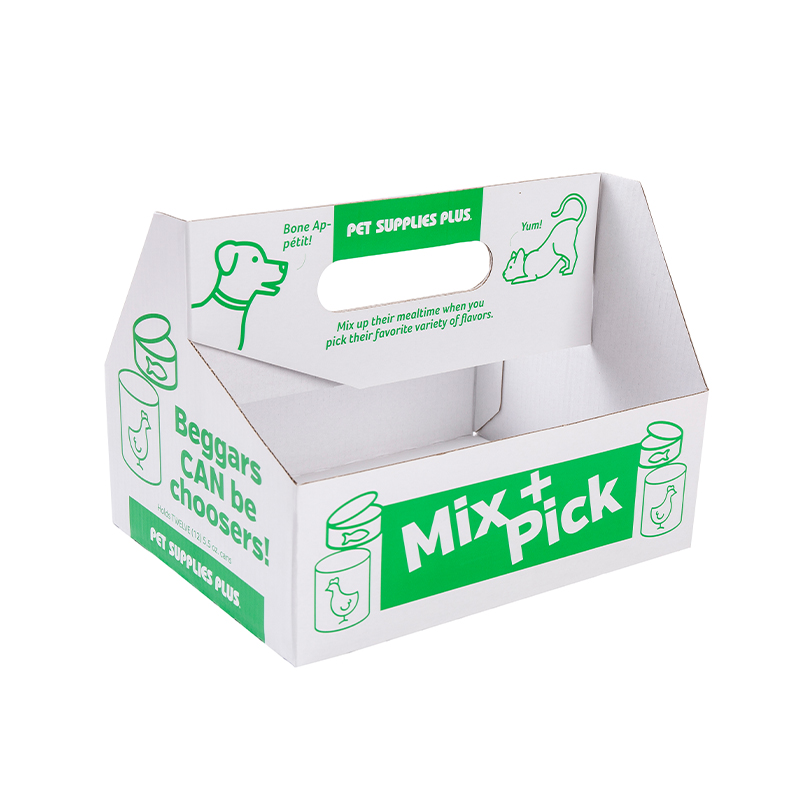
Tear-Off Foldable PDQ Tote Cartons
The strength and print quality of any corrugated packaging—including PDQ Display Boxes—is fundamentally determined by its flute structure. The flute, the wavy layer sandwiched between the linerboards, dictates the overall caliper, crush resistance, and stacking strength. For retail displays, the focus often narrows to finer flutes, which offer a superior surface for litho-laminated graphics. We must determine the optimal flute grade for counter display strength based on the product's weight and the display's lifespan. The most common single-wall options considered for displays are E-flute and B-flute, sometimes in combination for heavier applications. Here is a comparison of their characteristics:
E-flute is generally preferred for its excellent print surface and reduced board thickness, making it ideal for compact designs. B-flute, however, offers superior cushioning and rigidity, often chosen for displays holding heavier or more delicate items. The technical decision must weigh the graphic demands against the required Box Compression Test (BCT) values.
| Flute Grade | Flutes per Linear Foot (Approx.) | Flute Height (Inches) | Primary Benefit for PDQ | Recommended Use Case |
|---|---|---|---|---|
| E-Flute | 90-96 | 1/16 | Excellent Printability, Smooth Surface | Small, high-graphic counter displays for light products (e.g., cosmetics, snacks). |
| B-Flute | 47-50 | 1/8 | Superior Cushioning, High Rigidity | Displays for medium-weight products (e.g., small electronics, bottled items). |
E-flute is the industry standard for high-end point-of-purchase (POP) and PDQ Display Boxes. Its approximately 90-96 flutes per linear foot create a very stable, smooth surface. This high flute density minimizes the "washboard" effect—the visibility of the corrugated lines—on the final printed sheet, which is crucial for achieving high-fidelity lithography. E-flute provides sufficient compression strength for most counter display applications where product weights are modest. The reduced caliper (thickness) also results in less material volume, lowering shipping costs and requiring less space in the retail environment.
B-flute is a robust alternative, featuring fewer flutes but a greater height (approximately 1/8 inch). While its slightly coarser surface texture may be noticeable under high-graphic printing compared to E-flute, it provides significantly better crush resistance and cushioning. When designing PDQ Display Boxes for products that are prone to vertical compression damage or have a higher unit weight, B-flute should be specified. It is often the choice for displays that need enhanced resistance to transit handling or for longer-term placement in-store, ensuring greater corrugated flutes for PDQ display stability.
For large floor-standing displays or counter displays holding exceptionally heavy merchandise (e.g., multiple units of liquid detergent or tools), single-wall boards may not meet the BCT requirements. In these cases, a double-wall combination, such as EB-flute (E-flute laminated onto a B-flute layer), provides maximum rigidity. The E-flute faces outward for print quality, while the B-flute provides the robust cushioning and stacking strength. The decision to use double-wall structure must be carefully weighed against the higher material cost, ensuring the enhanced durability justifies the expenditure.
A key function for the B2B buyer is to source cost-effective materials for temporary retail displays without risking structural failure, which could damage the brand's reputation and lead to costly claims. The material selection—flute grade, linerboard basis weights, and recycled content—is the primary lever for cost control. The technical specification of the linerboard (e.g., 200# Test vs. 275# Test) directly impacts both cost and strength. Our engineers utilize advanced structural design software to perform virtual BCT analysis, allowing us to identify the most efficient material combination. Often, cost savings are achieved not by downgrading the flute, but by optimizing the die-cut pattern and structural geometry (e.g., adding internal reinforcement tabs or utilizing better locking mechanisms). This ensures that while we achieve excellent corrugated flutes for PDQ display stability, we are not over-engineering the solution.
| Cost/Strength Factor | Impact on Strength (BCT) | Impact on Cost | Notes for Optimization |
|---|---|---|---|
| Higher Flute Density (e.g., E vs. C) | Lower stacking strength, but better crush resistance | Generally lower material volume/cost | Best for high-graphic, lighter loads. |
| Higher Linerboard Basis Weight | Significantly increases BCT and Edge Crush Test (ECT) | Increases material cost per unit | Necessary for heavy loads; cost justified by preventing failure. |
| Double-Wall Flute (e.g., EB) | Highest BCT/Stacking Strength | Highest material cost | Only specify for mission-critical, heavy-load displays. |
Modern B2B purchasing mandates increasingly prioritize sustainable sourcing. This requires manufacturers of PDQ Display Boxes to provide verifiable documentation regarding fiber origin and material composition. As a company that has passed the ISO14000 environmental management system certification, Suzhou New Century Color Printing Co., Ltd. is uniquely positioned to meet these demands with expertise and certified processes. We specialize in sourcing and producing displays using FSC-certified corrugated for retail displays. The Forest Stewardship Council (FSC) Chain-of-Custody (CoC) certification is the international gold standard, ensuring that the paperboard fiber originates from responsibly managed forests. For our partners, specifying FSC-certified stock provides irrefutable proof of their commitment to environmental stewardship. Furthermore, we offer a full range of eco-friendly PDQ box material options, which are 100% recyclable in standard paper recycling streams. We guide clients on the trade-offs between Virgin and Post-Consumer Recycled (PCR) content. While PCR content is highly desirable for sustainability metrics, it can sometimes marginally reduce fiber strength, which must be compensated for by adjusting flute size or basis weight to maintain the required BCT value. Our established GMI and quality systems ensure that sustainability does not come at the expense of structural integrity, aligning with our philosophy of "maintaining sustainable development while not forgetting various management tasks surrounding product quality and social responsibility."
The optimal design and manufacturing of PDQ Display Boxes require a highly technical approach, carefully balancing the need for optimal flute grade for counter display strength, graphical excellence, and cost control, all within a framework of verifiable sustainability. For buyers, the choice of a manufacturing partner is critical. Located strategically near major ports and transport hubs—including Shanghai Port and Shanghai Hongqiao International Airport—Suzhou New Century Color Printing Co., Ltd. is positioned to offer highly efficient supply chain solutions. Our high-starting point, advanced equipment, and strong technical force, combined with a commitment to FSC-certified corrugated for retail displays and eco-friendly PDQ box material options, allow us to offer unparalleled service. We welcome the opportunity to establish a long-term supporting cooperative relationship based on integrity, pragmatism, and common development, providing tailored, engineered solutions for your next retail campaign.
Customizable Shapes Corrugated Paper Display Boxes & Car... View More
Adult product packaging boxes are designed to meet a variety... View More
Pizza Collapsible Corrugated Packaging Carton is a carton sp... View More
Tear-off Display Carton is a paper box with a special design... View More
No. 88, Zhiying Street, High-tech Zone, Suzhou City, Jiangsu Province, China.
+(86)-512-6575-0991
+(86)-13776090470

Copyright © SuZhou New Century Color Printing Co., Ltd. Custom Printed Colored Corrugated Boxes





 Français
 Español
 عربى
عربى