
Article Directory
A packaging buyer walks through a supermarket aisle, counts how many SKUs hang from peg hooks, and realizes how much depends on a single die-cut hole and the board behind it. Retail hanging boxes are among the most practical packaging formats in the store, and the question of what materials are used in retail hanging boxes usually has one answer: coated white paperboard, corrugated board, PP sheet, and PET window film. Which one you choose depends on product weight, display environment, printing requirements, and total cost.
Four material families cover the majority of retail hanging boxes. Each balances stiffness, printability, cost, and durability differently.
The material has to do more than look good. The hanging hole concentrates stress in a small area, so the board must be stiff enough not to tear under the product's weight, yet thin enough to keep cost under control. That balance is what separates hanging-hole packaging cartons that stay on the shelf from those that end up in the returns bin.
Coated white cardboard is the most common material for retail hanging boxes. A typical specification is 300 to 400 gsm, which provides enough bending stiffness for products up to about 500 g. It accepts high-detail offset printing, works with matt or gloss lamination, and die-cuts cleanly without cracking at the fold. That is why cosmetics, small electronics, toys, and daily necessities usually start with coated board. A custom supermarket carton with hanging hole is a good example: most are produced on 300 to 400 gsm coated board with a reinforced top fold behind the peg slot.
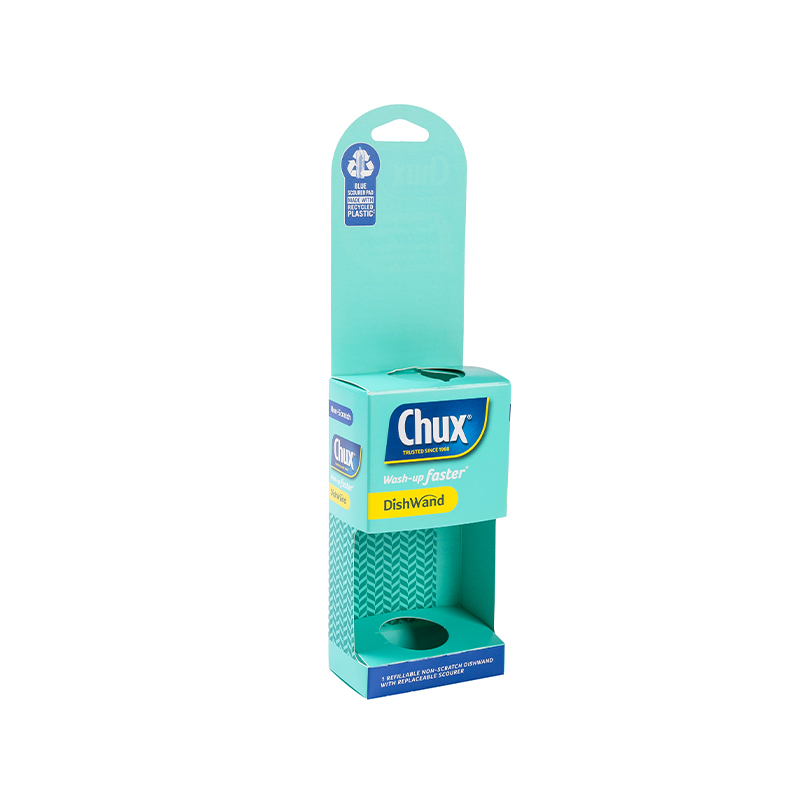 Wholesale Gift Tab Retail Packaging Box Packaging Carton With Hanging Hole And CSuZhou New Century Is China Wholesale Gift Tab Retail Packaging Box Packaging Carton With Hanging Hole And Clear PVC Window Suppliers, Gi...View Product →
White duplex and CCNB have a grey reverse side that is acceptable when the inside of the box is hidden. CCNB, in particular, is a lower-cost choice that still prints reasonably well on the outer surface. Kraft and recycled board are chosen when the brand wants a natural, eco-friendly look; the trade-off is lower whiteness and a slightly rougher printed finish. For lightweight daily items such as masks, the material still needs enough folding strength around the hole. Removable and hangable mask cartons rely on folded layers at the top of the box so the perforation and the hanging hole keep their shape in normal use.
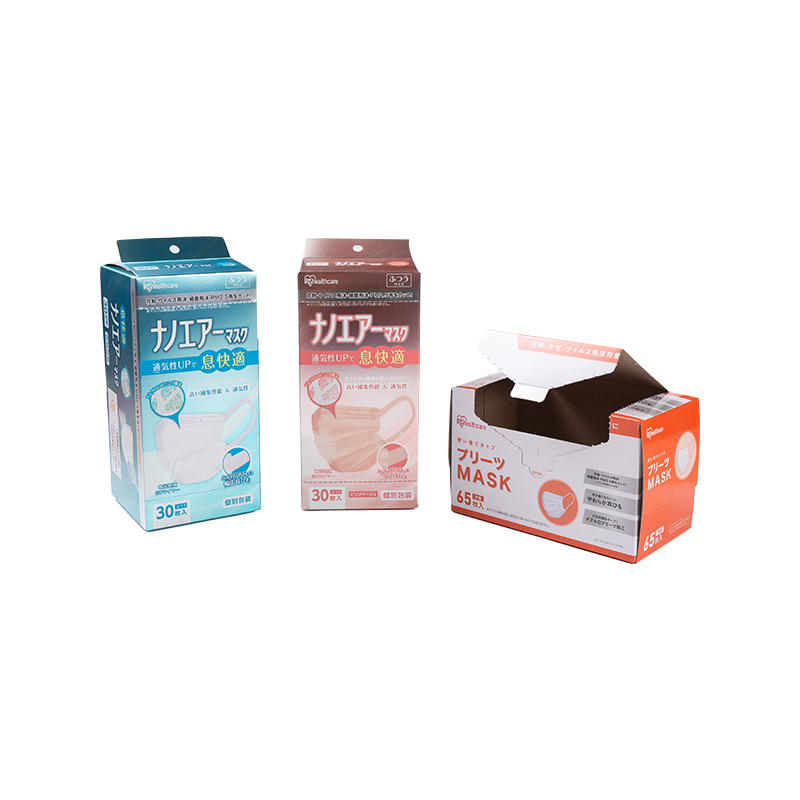 Wholesale Removable And Hangable Mask Packaging Carton, Coloured Cardboard BoxesSuZhou New Century Is China Wholesale Removable And Hangable Mask Packaging Carton, Coloured Cardboard Boxes For Mask Suppliers, Removabl...View Product →
When the product weighs more than 500 g, or when the box has to protect its content from crushing, corrugated board becomes the practical option. E-flute, roughly 1.2 to 1.6 mm thick, is the most common grade for hanging boxes: it is thin enough for printing but stiff enough for loads in the 1 to 3 kg range. F-flute and N-flute, around 0.6 to 1.1 mm, are used when the carton needs a tighter overall dimension. Flute direction matters: when the flutes run parallel to the hook, the box resists bending better, and a laminated outer liner provides a smoother surface for print.
Corrugated hanging boxes are typical for power tools, household appliances, multi-packs, and promotional displays. The same structural logic applies to retail-ready packaging for shelves and peg panels: heavier product, thicker board.
Polypropylene sheet is a different category from paperboard. It is used when a box must resist water, grease, or frequent touching, so PP hanging boxes appear in bathrooms, supermarkets, and hardware stores. The material is more tear-resistant than paperboard at the same thickness, which means the hanging hole stays stable after weeks of being pulled off and put back on a hook. PP packaging boxes with hanging holes show how a manufacturer combines a durable plastic sheet with a die-cut hook slot. If your product is sold through a supermarket chain, a PP hanging-hole supermarket packaging carton can be printed directly or laminated, depending on the brand's visual standard.
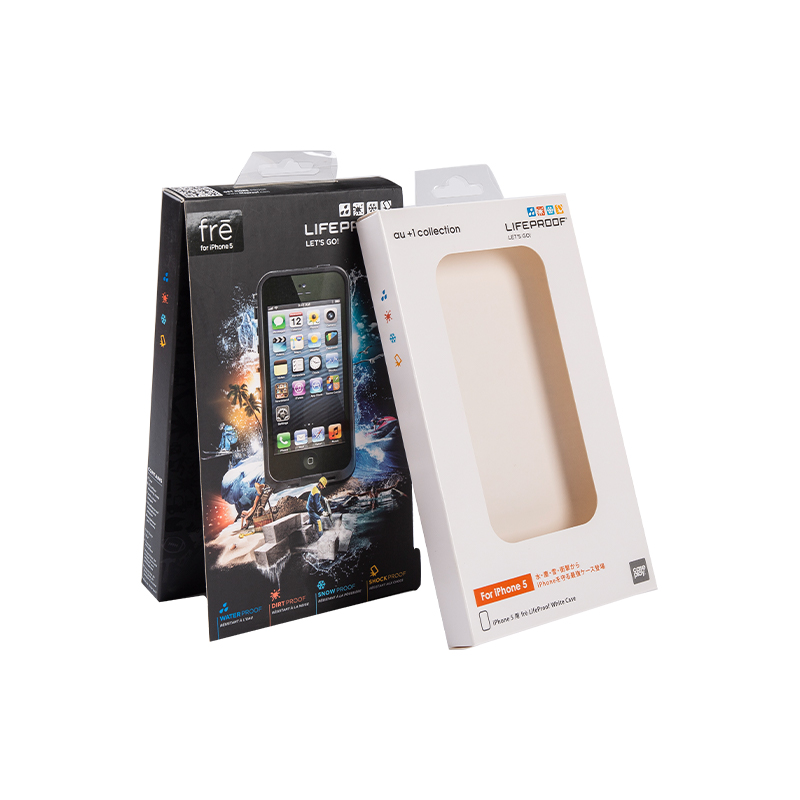 Wholesale Printed PP Retail Product Packaging Box Hanging Hole Packaging PackagiSuZhou New Century Is China Wholesale Printed PP Retail Product Packaging Box Hanging Hole Packaging Packaging Carton Suppliers, Printed ...View Product →
Many brands prefer a paperboard hanging box with a PET window rather than a fully plastic carton. PET film is clear, rigid, and does not yellow as quickly as PVC, and it can be glued or folded into a window cut-out so customers see the product while the rest of the package keeps the printability of paperboard. Hybrid construction like this is common for toys, cosmetics, and small gift items, where the transparent window and hanging hole design need to work together. The window area is budgeted carefully because PET film costs more per square meter than paperboard.
Material selection does not stop at the substrate. Lamination and coatings affect how a box behaves on a hook. Matt or gloss lamination adds a scuff-resistant layer and improves moisture resistance, which also protects the area around the hole. Spot UV, soft-touch coating, and foil stamping change the surface feel and are common on premium cosmetics and gift packaging. Foil stamping works best on smooth coated board; heavily textured kraft limits foil adhesion.
One caution: a thick lamination film can change the stiffness and folding behaviour of the board, so the die-cut tolerance should be adjusted for the final thickness. Most hanging-hole designs keep the slot within about 0.5 mm of the specified size so the box slides onto a standard peg hook without wobbling or tearing at the edges.
The table below compares the materials commonly used in retail hanging boxes and their practical limits in the retail supply chain.
| Material | Typical basis weight or thickness | Practical hanging load | Print quality | Common products |
|---|---|---|---|---|
| Coated white cardboard (SBS / white duplex) | 300-400 gsm | Up to about 500 g | Excellent | Cosmetics, toys, small electronics, daily necessities |
| Grey-back (CCNB) board | 300-400 gsm | Up to about 500 g | Good | Masks, personal care, budget consumer goods |
| Kraft or recycled board | 300-400 gsm | Up to about 400 g | Moderate | Eco-friendly brands, natural goods |
| E-flute corrugated | 1.2-1.6 mm | 1-3 kg | Good | Power tools, household items, multi-packs |
| F-flute or N-flute corrugated | 0.6-1.1 mm | Up to about 1 kg | Good | Small appliances, gift sets |
| PP sheet | 0.3-0.6 mm | Up to about 1 kg | Good | Toiletries, hardware, humid-area products |
Two structural details matter as much as the material. The hanging hole is usually die-cut 12 to 15 mm from the top edge, and heavier products need a reinforced top fold or a laminated patch around the slot. Always test the box with the heaviest item in the planned range: a box that passes a static load test may still fail after a month of being pulled off and put back on the hook.
Follow these steps when you select a material for a retail hanging box:
The material decision is only the first step. Retail hanging boxes also require precise die-cut tooling, stable folding, and print registration that holds across large production runs. A manufacturer with experience in both paperboard and plastic hanging packaging can recommend the right substrate, confirm the load capacity, and adjust the die-cut tolerance before mass production begins.
Suzhou New Century Color Printing has produced hanging-hole packaging for supermarkets, daily necessities, cosmetics, and wall-display products from its 26,000-square-meter facility in Suzhou. The company's product range covers both paperboard cartons with hanging holes and PP-based packaging, so the material selection is made in-house rather than limited by the available press or die cutter. That combination is exactly what brands need when moving a new SKU from concept to the retail hook.
Gift tag retail packaging box carton with hanging hole and t... View More
Adult product packaging boxes are designed to meet a variety... View More
Printed PP retail product packaging boxes are a high-quality... View More
Pizza Collapsible Corrugated Packaging Carton is a carton sp... View More
No. 88, Zhiying Street, High-tech Zone, Suzhou City, Jiangsu Province, China.
+(86)-512-6575-0991
+(86)-13776090470

Copyright © SuZhou New Century Color Printing Co., Ltd. Custom Printed Colored Corrugated Boxes





 Français
 Español
 عربى