
Article Directory
Walk through any supermarket, drugstore, or hardware aisle and you will see the same packaging decision repeated on nearly every pegboard hook: a product suspended from a hole cut into its box. Some of those boxes are made from smooth paperboard; others are made from corrugated board. They look similar from the front, but they behave very differently on the hook, on the shelf, and in transit.
Here is the short answer: choose paperboard when print quality and premium appearance matter most and the product stays under roughly one kilogram. Choose corrugated when the product is heavier, needs cushioning, or has to survive long-distance shipping and warehouse stacking. The rest of this guide explains the material differences, the structural trade-offs, and the cost signals behind each option.
Every hanging box combines three functions: it protects the product, carries the product's weight through the hang hole, and becomes a small billboard when displayed on a pegboard. The material choice changes how well the box delivers each function.
Because pegboard hooks expose more product per square meter than a traditional shelf, hanging-hole packaging in retail keeps expanding across categories. The material underneath the ink is what decides whether all three functions hold up in real stores.
Paperboard, also called folding carton board or solid board, is the default choice for hanging boxes in cosmetics, personal care, small electronics, and confectionery. Typical basis weights run from 250 to 400 gsm, with 300-350 gsm being the most common range for retail hanging applications.
Paperboard's coated surface takes offset printing, UV, nano UV, reverse UV, matte lamination, and hot stamping without visible texture interference. Fine text, gradients, and photographic imagery reproduce predictably. For a premium product on a crowded hook rail, print quality usually outweighs raw structural strength.
On its own, a 300 gsm sheet carries lightweight products comfortably. For heavier items, manufacturers reinforce the hang area with PP tape, folded inner layers, or a die-cut hook tab that doubles the material at the stress point. Products up to roughly 1 kg work reliably with these reinforcements when the box structure is designed correctly. A common example is the PP hanging-hole supermarket packaging carton, which adds a polypropylene strip at the hole so the board does not tear under repeated pegboard loads.
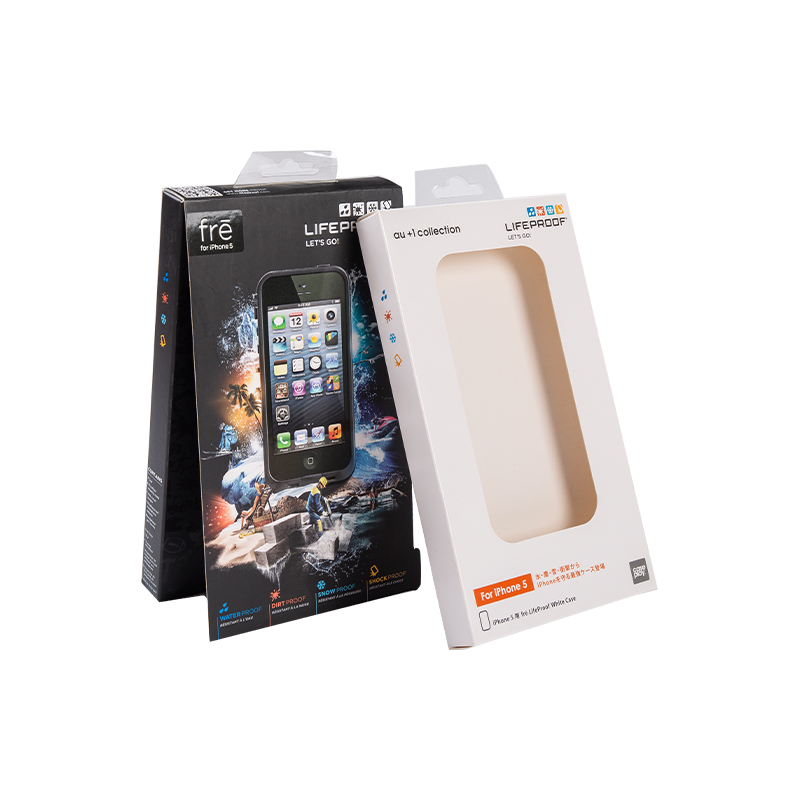 Wholesale Printed PP Retail Product Packaging Box Hanging Hole Packaging PackagiSuZhou New Century Is China Wholesale Printed PP Retail Product Packaging Box Hanging Hole Packaging Packaging Carton Suppliers, Printed ...View Product →
The practical ceiling appears when product weight passes 1 to 1.5 kg, when the package becomes very large, or when the box must also serve as a shipping carton. A heavy product inside a paperboard hanging box will gradually stress the hole, and large panels may sag. Those signals are your cue to consider a corrugated structure instead.
Corrugated board, built from a fluted medium sandwiched between two liners, appears less frequently in elegant retail environments but far more often in hardware stores, auto accessory shops, big-box retail, and e-commerce operations. Its strength comes from the fluted core, which delivers stiffness without adding excessive weight.
E-flute (about 1.5 mm thick) and F-flute (about 0.8 mm) are the usual choices for retail corrugated boxes that still need reasonable print quality. B-flute (about 3 mm) and C-flute (about 4 mm) add much more crush resistance and stacking strength, but the flute structure becomes visible on the surface and restricts printing detail. For hanging applications, E-flute usually hits the sweet spot: enough stiffness for heavier products, and thin enough for clean die-cutting. Our flute grade guide explains how each flute affects strength, thickness, and printability in more detail.
Corrugated board does not offer the same smooth print surface as paperboard. Standard flexographic printing handles solid colors, simple line work, corporate logos, and barcodes well, but struggles with fine screens and high-resolution photography. When a corrugated box needs high-end graphics, manufacturers print a separate label and bond it to the board in a process called litho-lamination, which raises unit cost. For retail programs that need both structure and dependable decoration, flexible printed cartons made with pre-printed liner offer a practical middle ground.
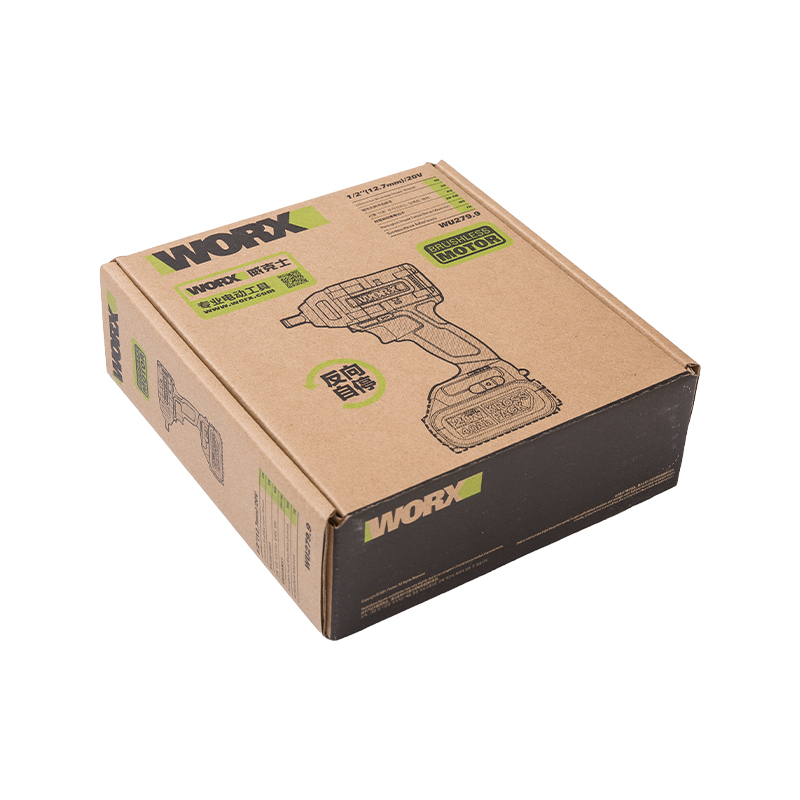 Wholesale Customizable shapes Corrugated Paper Display Boxes Packaging Carton FlSuZhou New Century Is China Wholesale Customizable shapes Corrugated Paper Display Boxes Packaging Carton Flexible Printed Packaging Boxe...View Product →
Corrugated carries heavier weights, from 1 kg up to 5 kg or more depending on flute grade and box design, without visible sagging. It also cushions the product during transport, resists impact, and can serve as both display package and shipping carton. That dual role is why corrugated is the standard for hardware, automotive accessories, and multi-pack consumer goods.
| Factor | Paperboard hanging box | Corrugated hanging box |
|---|---|---|
| Typical material | 250-400 gsm solid paperboard | E/F flute or B/C flute corrugated board |
| Surface quality | Smooth, ideal for fine print | Fluted texture; flexo limits fine detail |
| Print processes | Offset, UV, nano UV, hot stamping | Flexo; litho-lamination for higher quality |
| Weight capacity | Light to medium, up to roughly 1-1.5 kg with reinforcement | Medium to heavy, 1 kg and above |
| Hang-hole durability | Needs PP tape or folded reinforcement for heavier loads | Strong by default; thicker edges resist tearing |
| Protection | Moderate | Good cushioning and impact resistance |
| Typical products | Cosmetics, small electronics, confectionery, personal care | Tools, auto parts, multi-packs, large retail items |
Put the actual product inside a sample box and hang it for 24 to 48 hours. Check the hang hole area for elongation or tearing, and check whether the front panel starts to sag. The same 350 gsm board that comfortably holds a small cosmetic tube may fail with a heavier tool, because box dimensions and weight distribution matter as much as the material itself. If the box will be re-hung many times, or if shoppers routinely handle and replace the product, add PP reinforcement on the paperboard side or move up to E-flute corrugated.
If the design relies on photographic imagery, gradients, metallic accents, or soft-touch finishes, paperboard is the practical choice. If your brand identity can communicate with bold colors, strong typography, and a clear logo, corrugated with flexo printing will keep unit costs down. For a reinforced but still highly printable option, PP packaging boxes with hanging holes combine a taped hang area with the finish options of paperboard.
Corrugated boxes stand up to warehouse handling, stacking, and long supply chains. If the boxes will be stacked in storage, ask for the edge crush test (ECT) rating from your supplier. Paperboard boxes are usually shipped flat and set up at the packing station, which saves transport space but requires more handling at the point of fill. In humid conditions, corrugated board can absorb moisture and lose stiffness, so specify a moisture-resistant coating if your supply chain passes through high-humidity regions. Paperboard with lamination behaves more predictably in normal store conditions.
At moderate volumes, a printed paperboard hanging box is often less expensive than a corrugated box with a litho-laminated label, because the lamination step adds labor and material. For heavy-duty boxes where flexo printing is acceptable, corrugated usually wins on price. Compare the complete cost per box, including printing, die-cutting, lamination or lining, and freight.
Both materials are paper-based and recyclable, but finishing determines how easy the box is to recycle. A laminated or heavily coated box can complicate the recycling stream, while an uncoated corrugated box with water-based flexo ink is generally easier to process. If your retail customer publishes sustainability targets, confirm coating and ink choices with your supplier before locking the specification.
The real takeaway is that neither material is objectively better; each one is better in a different weight class, print requirement, and retail context. A supplier that can produce both types avoids the bias of a single-material production line. Ask for physical samples, test the hang strength with your heaviest SKU, and confirm the print finish on your actual design before scaling up. Whether you need a printable supermarket carton with hanging hole for fast-moving consumer goods or a heavier corrugated structure for industrial products, the selection process stays the same: weigh the product, test the box, and compare the total landed cost.
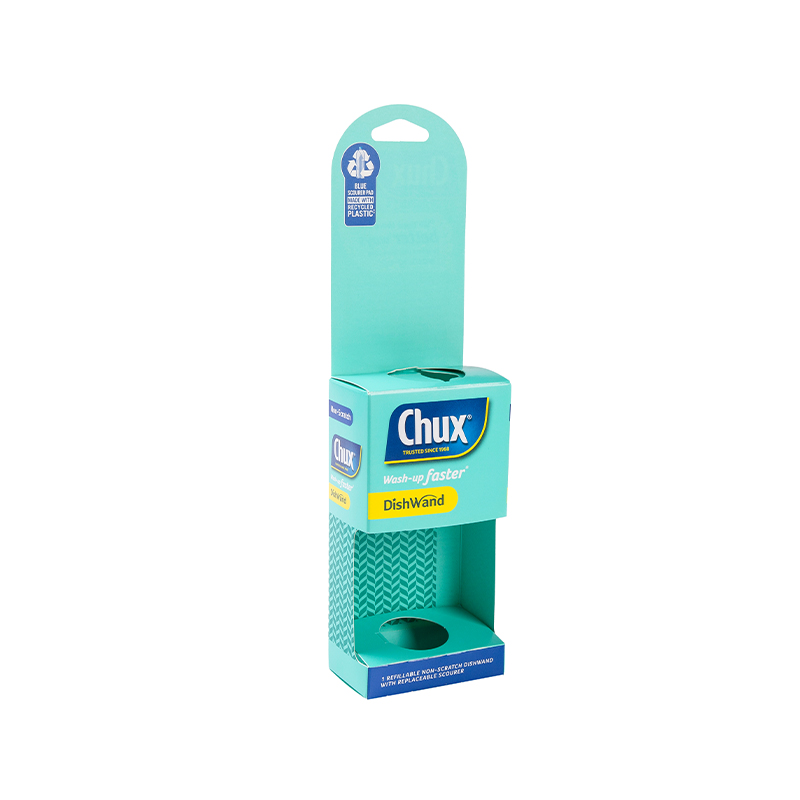 Wholesale Gift Tab Retail Packaging Box Packaging Carton With Hanging Hole And CSuZhou New Century Is China Wholesale Gift Tab Retail Packaging Box Packaging Carton With Hanging Hole And Clear PVC Window Suppliers, Gi...View Product →
Our printed coloured 6 bottles cardboard wine boxes are engi... View More
E-Commerce Mailer Printing Corrugated Airplane Box Aircraft ... View More
Pizza Collapsible Corrugated Packaging Carton is a carton sp... View More
The Taco White Cardboard Box is a carton specifically design... View More
No. 88, Zhiying Street, High-tech Zone, Suzhou City, Jiangsu Province, China.
+(86)-512-6575-0991
+(86)-13776090470

Copyright © SuZhou New Century Color Printing Co., Ltd. Custom Printed Colored Corrugated Boxes





 Français
 Español
 عربى
عربى