
Article Directory
Two cartons for the same 30 g hand cream tube sit on a buyer's desk. One has a die-cut hanging slot for a peg hook; the other is a closed folding carton built for a shelf. Both protect the tube, both print cleanly and both come from the same production line. The choice is not about quality. It is about where shoppers see the product first and which format your packing line can handle at speed.
Hanging box packaging is a folding carton with an integrated die-cut slot, PP strap or punched hole that lets it hang from a peg hook or wall rail, while a regular folding carton is a creased and glued paperboard container that stands independently on a shelf.
The two formats share most of their anatomy. Both start as a flat die-cut blank, both are creased and folded, and both are printed before conversion. The differentiator sits in the die-cut shape: a hanging box adds a slot, a trap or a polypropylene header that shifts the carton's center of gravity so it hangs straight on the hook.
A regular folding carton relies on a flat base, square corners and closure flaps to protect the product in transit and on the shelf. It runs on high-speed automatic cartoning lines, stacks efficiently in shippers and gives designers the full panel surface for graphics. Neither format is inherently better; the retail fixture, product weight and packing line decide the spec.
The hang feature is the only structural difference, but it forces changes in board grammage, die-cut tolerance, lamination and transport protection.
| Feature | Hanging box packaging | Regular folding carton |
| Display mode | Peg hook, wall rail or slatwall | Shelf, countertop or stack |
| Hang mechanism | Die-cut slot, PP strap or punched hole | None |
| Typical board | 300-400 gsm coated white card with lamination | 250-450 gsm white card or microflute |
| Print area | Reduced near the hang slot | Full panels available |
| Filling method | Manual or semi-automatic | High-speed automatic cartoning |
| Transport behavior | Flat-packs; slot area needs crush protection | Flat-packs; strong stacking and compression |
| Main failure risk | Slot tear or tilt under repeated handling | Corner crush and panel bulge in humidity |
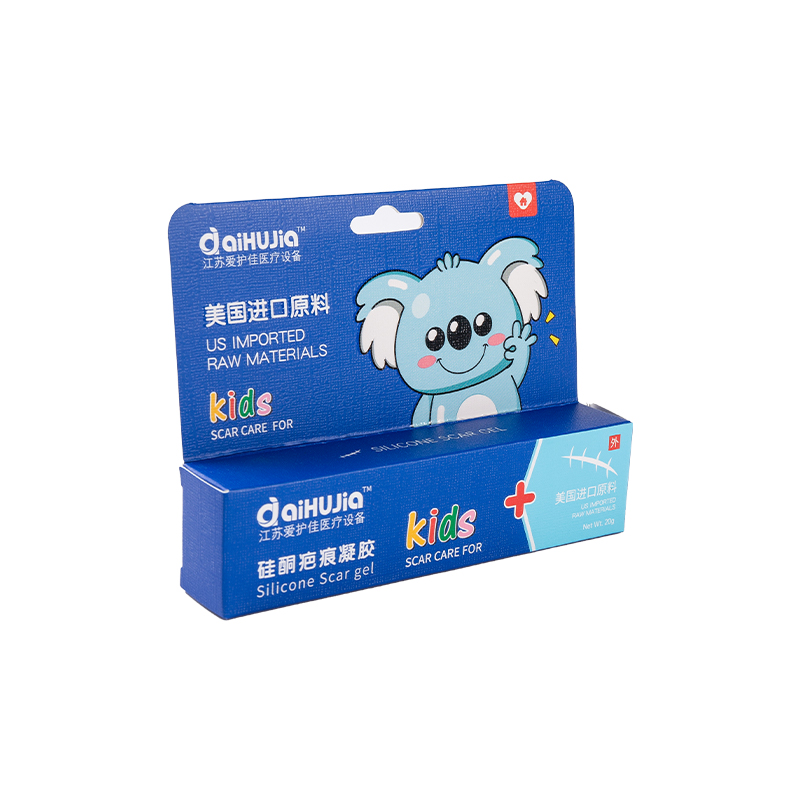
The most common execution in retail packaging is a PP hanging-hole supermarket packaging carton, where a polypropylene strap wraps the slot and takes part of the load. That execution explains why a supermarket can hang tubes, sachets and small tools in the same fixture without tearing the board. If you replace the reinforced slot with a simple punched hole, the carton still works but the tear risk rises sharply.
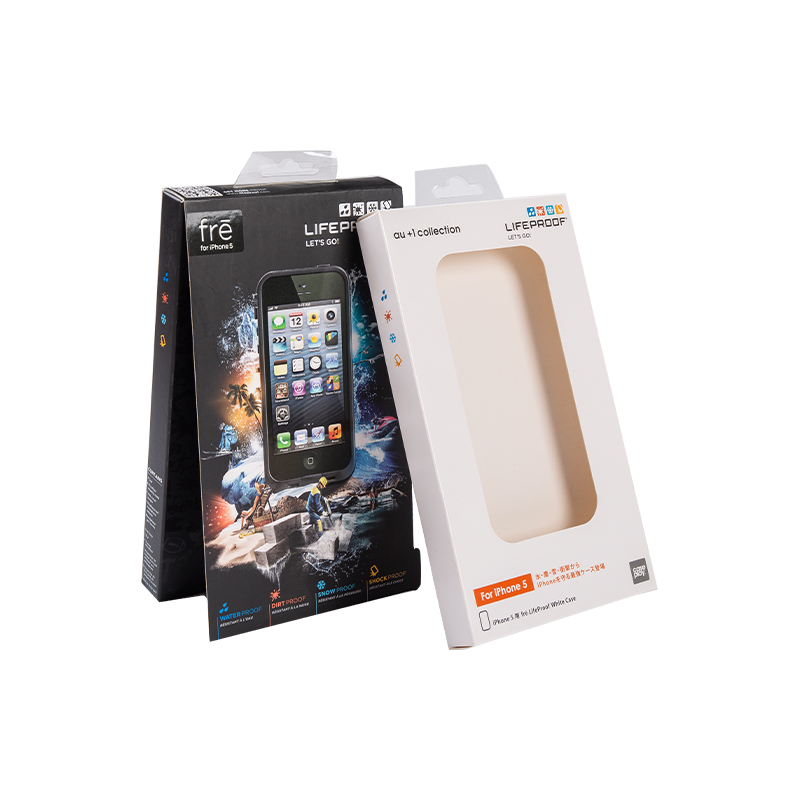 Wholesale Printed PP Retail Product Packaging Box Hanging Hole Packaging PackagiSuZhou New Century Is China Wholesale Printed PP Retail Product Packaging Box Hanging Hole Packaging Packaging Carton Suppliers, Printed ...View Product →
Regular folding cartons in the same weight range skip the slot and the strap, which simplifies die-cutting and allows faster automatic filling. The trade-off appears at the point of sale: without a hang feature, the product is limited to the shelf position.
Hanging boxes deliver eye-level visibility and efficient use of vertical wall space, while regular folding cartons win on stacking strength, packing automation and premium shelf presence.
Retailers are treating the hangable carton as a standard option rather than a novelty. Pharmacies, convenience stores and supermarkets want checkout walls and end caps without adding fixtures, and current packaging programs increasingly combine a hang-hole carton for the display lane and a standard folding carton for the shelf lane. For a closer look at where this format is heading, read the retail packaging trend analysis for hang-hole cartons.
A dedicated supermarket carton with a hanging hole is produced on the same offset and finishing lines as a standard folding carton, which keeps the added cost small while expanding display options at the fixture.
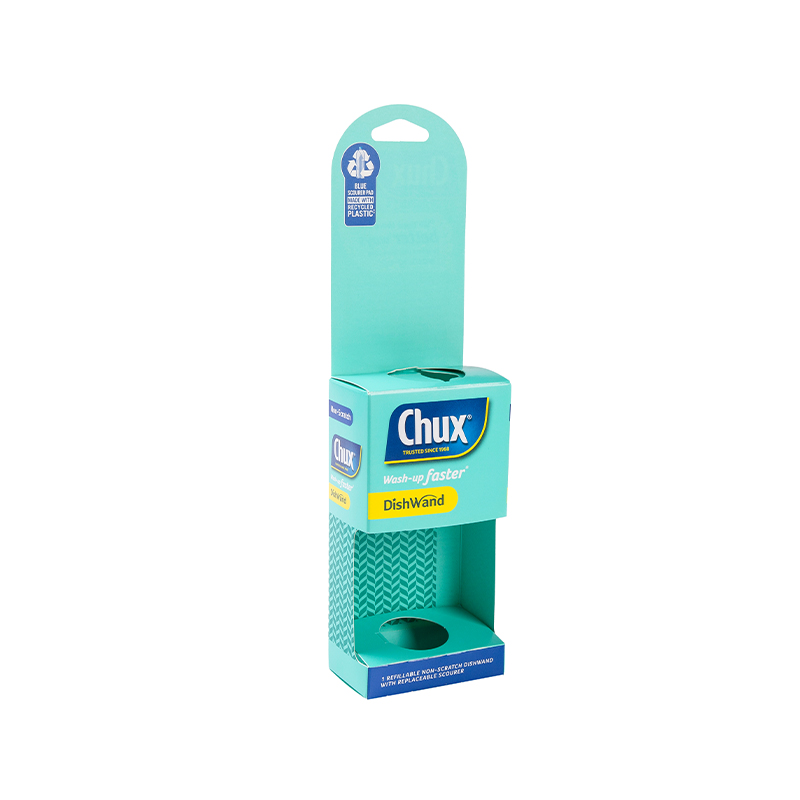 Wholesale Gift Tab Retail Packaging Box Packaging Carton With Hanging Hole And CSuZhou New Century Is China Wholesale Gift Tab Retail Packaging Box Packaging Carton With Hanging Hole And Clear PVC Window Suppliers, Gi...View Product →
Scores reflect typical retail and production behavior; values change with board weight, product mass and fixture design.
The retail fixture decides the format. If the planogram shows a peg hook, the carton needs a hang feature; if it shows a shelf, the carton needs a strong base.
Adding a hanging feature does not raise material cost significantly; the real cost drivers are board weight, lamination, die-cut precision and finishing coverage.
Production starts with the same 250-450 gsm board family for both formats. The difference appears in three places. A hanging carton usually needs 300-400 gsm coated white card plus matte or clear film lamination to protect the slot edge; a regular folding carton often runs at 250-300 gsm without lamination; and the hang slot demands a die-cut tolerance close to +/- 0.5 mm so every carton aligns on the same hook.
Printing and finishing are identical for both formats: offset printing, water-based flexo for corrugated, nano UV, reverse UV, matte film, spot UV and hot stamping all apply. SuZhou New Century Color Printing Co., Ltd., a council member of the Jiangsu Printing Industry Association, runs them through the same prepress, press and postpress workflow, so a brand can mix hanging and folding cartons in one order without splitting suppliers. For brands working with everyday consumer goods, the technical guide to daily necessities packaging cartons covers material selection and structural checks that apply to both formats.
A typical regular folding carton execution is a 350 gsm white card folding carton for daily necessities, printed in offset with UV coating, which achieves the same print quality as a hanging version while running faster on automatic filling lines.
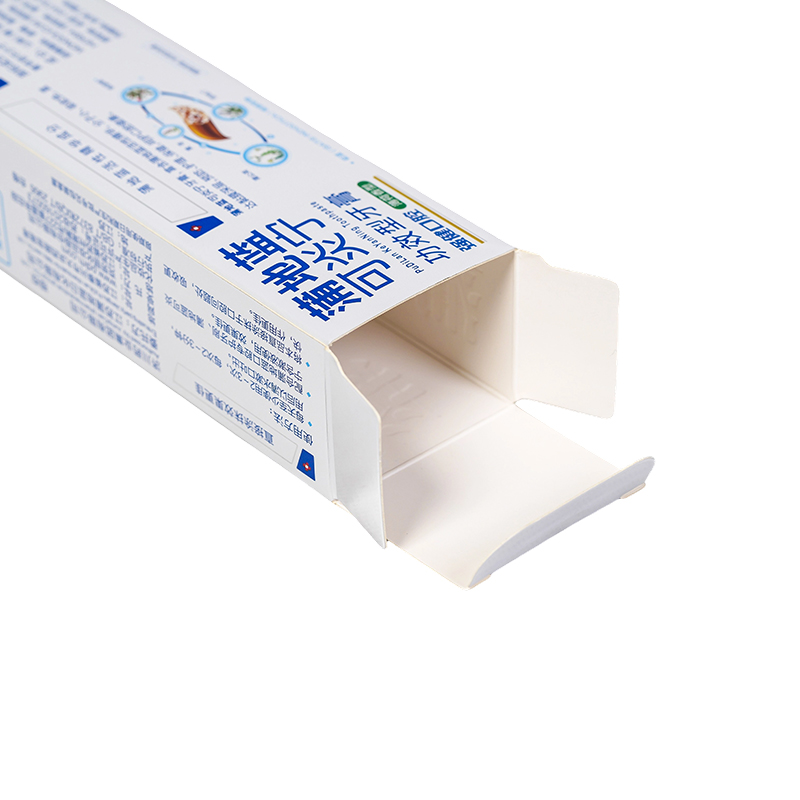 Wholesale 350g White Card UV Printing Daily Necessities Paper Packaging, ToothpaSuZhou New Century Is China Wholesale 350g White Card UV Printing Daily Necessities Paper Packaging, Toothpaste Packaging Box Suppliers, ...View Product →
Specify hanging box packaging when the product is small, light and assigned to a peg wall; specify a regular folding carton when the product is heavy, shelf-stacked or filled automatically.
Following this sequence before tooling keeps the project cheap to change. The same die-cutting, creasing and gluing line produces both structures; switching at the specification stage costs nothing, while switching after tooling adds new die costs and lead time. Where print volume and color accuracy decide the pack, review how to print on packaging boxes before freezing the artwork.
Yes, if the carton has a flat base and a reinforced rear panel. The hang slot weakens the rear panel, so stacking several hanging cartons face-up is possible only with a heavier board. Treat hanging as the display mode and folding as the stacking mode.
300 to 400 gsm coated white card, with 350 gsm as the most common starting point. Above that weight, the board can crack at the crease near the slot if the grain direction is wrong, so the printer should run a crease test before mass production.
The box itself costs about the same. Added cost comes from heavier board, film lamination and tighter die-cut tolerance. In practice, brands typically pay 10 to 20 percent more for a reinforced hanging version of the same carton.
Yes. Offset and water-based flexo printing, nano UV, reverse UV, matte film, spot UV and hot stamping work on both. The printer should confirm that the lamination step does not stretch or distort the hang slot during die-cutting.
Printed PP retail product packaging boxes are a high-quality... View More
Gift tag retail packaging box carton with hanging hole and t... View More
Offset Printing Designs Cartons Packaging Boxes Folding Cart... View More
Electronic Products Packaging Design Carton Boxes Packaging ... View More
No. 88, Zhiying Street, High-tech Zone, Suzhou City, Jiangsu Province, China.
+(86)-512-6575-0991
+(86)-13776090470

Copyright © SuZhou New Century Color Printing Co., Ltd. Custom Printed Colored Corrugated Boxes





 Français
 Español
 عربى
عربى