
Article Directory
A brand owner receives 10,000 folding cartons and finds the colors are off, three boxes have cracked fold lines, and the die-cut slots do not line up with the product. This is not a design flaw. It is a quality-control breakdown that occurred somewhere between material purchase and final packaging. Packaging manufacturers that consistently deliver defect-free boxes treat quality as a measurable process, not as a slogan. For procurement teams and brand managers, understanding how those manufacturers actually control quality is the fastest way to avoid costly rework, returns, and damaged brand perception.
Box quality is a composite of material performance, dimensional accuracy, print consistency, and structural integrity. A quality box protects the product, survives the supply chain, and delivers the brand experience exactly as designed.
Box quality is the measurable outcome of raw material testing, controlled converting processes, and final product inspection. It is not a single metric or a one-time check.
A box that looks perfect on a desk can fail in a warehouse if the corrugated board is the wrong flute grade, if the adhesive has insufficient tack, or if the finished cartons have not been seasoned to the correct humidity. Quality-conscious manufacturers set acceptance criteria for every stage, from incoming paper reels to palletized shipments.
Every box leaving a factory passes through five checkpoints that determine its final quality. A single failure at any one of them can neutralize the gains made in the other four.
In a mature packaging plant, each control point has a written work instruction, a defined sampling frequency, and a decision rule for accepting or rejecting a batch. The goal is to detect defects before they reach the customer, not after.
Box testing is not a formality. It is a quantitative pass-for-fail gate that manufacturers use to verify whether a box will perform in the field. The tests below are the most common ones used by corrugated box and folding carton suppliers to benchmark their output.
Edge crush test (ECT) is the primary indicator of a corrugated box's ability to withstand vertical compression. A higher ECT value means the box can resist stacking pressure more effectively. For folding cartons, the relevant measurements are more often caliper, crease scoring, and varnish or film adhesion. A reputable manufacturer will provide test records for each lot, not just the certificate of analysis on the first sample set.
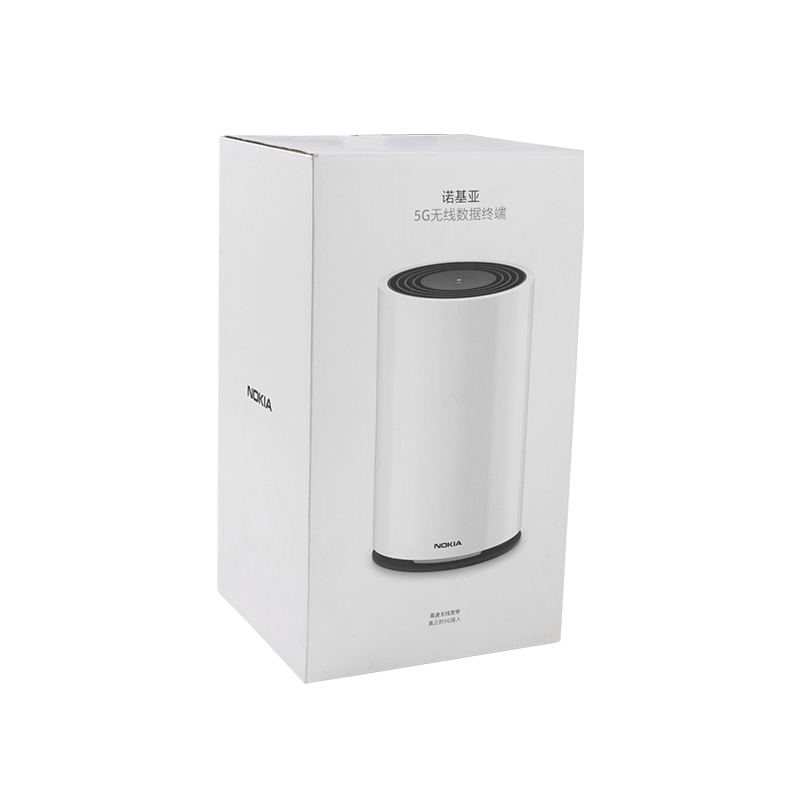 Custom Corrugated Carton Boxes for Electronic Products PackagingThese carton boxes offer tailored protection for electronics, with shockproof, moisture-proof, and pressure-resistant features. The context highlights the importance of testing such as ECT and drop tests, making this supplier's focus on physical inspection relevant.View Product →
Drop testing is especially important for electronics and fragile consumer goods. A box that passes the ECT standard but has a weak corner joint can still fail when a parcel is thrown onto a conveyor. That is why SuZhou New Century Color Printing Co., Ltd. and other established suppliers use both physical testing and visual inspection on finished product, not just one method.
The quality of a box is decided before a single sheet is printed. Material selection is the first and most consequential quality gate.
For folding cartons, the base paper (usually white card or coated board) is specified by grammage, caliper, stiffness, and surface finish. A 350-gram white card with a PE or PET lamination will behave very differently from a 230-gram board without lamination. For corrugated boxes, the flute profile (A, B, C, E, or F) and the basis weight of the medium and liners determine the structural performance. Water content in the board is also critical: paper with more than 12 percent moisture loses stiffness and is prone to warp, while paper below 7 percent becomes brittle and is more likely to crack at creases.
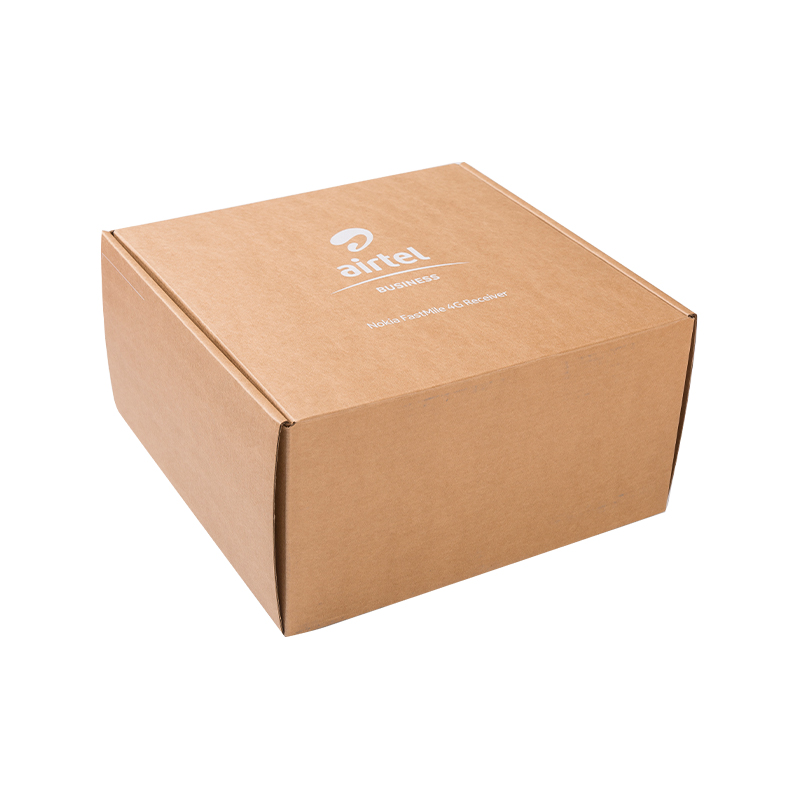 Offset Printed Folding Cartons for Diverse Industry ApplicationsAdvanced offset printing ensures accurate color reproduction, while the folding cartons suit food, cosmetics, and electronics. The surrounding text stresses material specs and evidence of no substitution, so this supplier's durable, eco-friendly options align with verification needs.View Product →
Sustainable and compliance-driven buyers should also require evidence that the paper stock is sourced from controlled supply chains. FSC certification and recycled content commitments, when audited, give an extra layer of assurance that the material has not been swapped or blended with lower-grade stock.
Material testing alone cannot prevent defects. It must be paired with disciplined process control on the line.
Modern printing presses with high-speed inline color scanning give operators real-time feedback on ink density and registration tolerance. SuZhou New Century Color Printing Co., Ltd., for example, operates a KBA 7-color press with an online scanning system, which allows its printers to hold color deviation within acceptable tolerances throughout the entire run. For corrugated lines, a fully computerized water-based printing and slotting machine keeps dimension and print placement consistent on long production runs.
Standardized color management is another pillar. Target color values, measured with a spectrophotometer and reported as ΔE values, should be agreed before production starts. A common acceptance threshold is ΔE below 3.0, which is visible to the trained eye only under controlled lighting. For premium brands, that threshold is sometimes tightened to below 2.0.
The same applies to die-cutting and creasing. Cutting dies are made to the final carton geometry, and the angle, depth, and width of the crease affect both folding effort and the appearance of the final pack. A poorly creased carton will have a washed-out look on the fold line, and that visible flaw is often what a brand owner notices first.
Link to relevant background reading: how corrugated boxes are manufactured and how strength is achieved gives buyers a useful technical baseline for discussing these topics with suppliers.
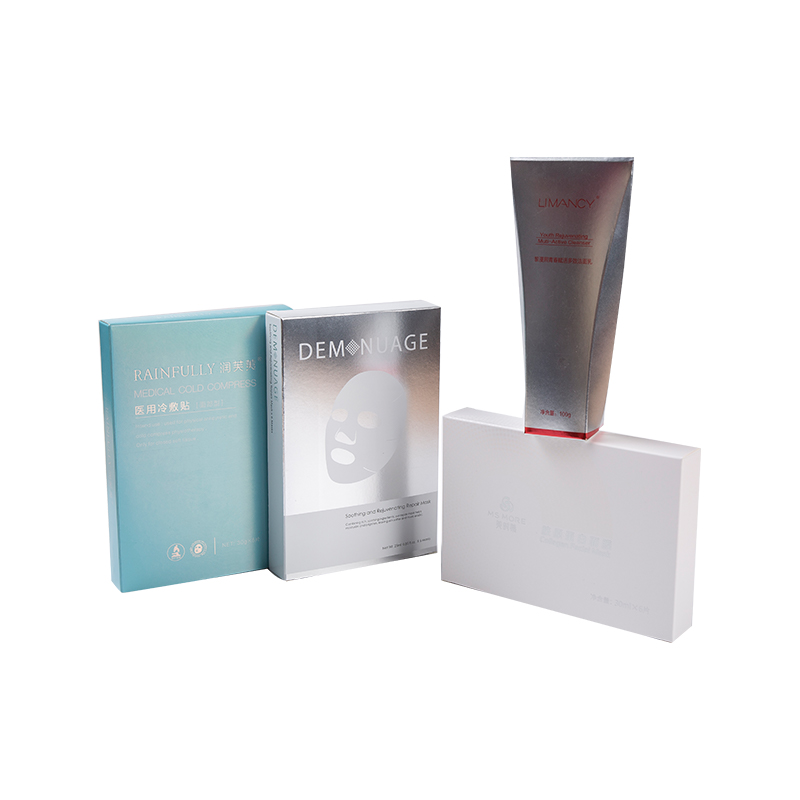 Silver Cardboard Mask Carton with Nano UV PrintingThis premium carton uses nano UV printing on silver cardboard for sharp graphics and durability. The context discusses surface treatments like spot UV and foil, making this box's high-end finish and scratch resistance a fitting choice for premium masks.View Product →
For high-end cosmetic and daily-care cartons, surface treatments such as spot UV, foil stamping, nano-UV reverse coating, or matte lamination require tight control of temperature, pressure, and dwell time. The finished effect must be uniform across the sheet; streaks or patchy areas are unacceptable on a premium pack.
Box quality failures are rarely contained to the box itself. They have a direct cost impact on the brand.
For retailers, a damaged or visually inconsistent pack directly affects sales. Cartons with a clear window or a hanging hole are particularly sensitive to print registration, because consumers see the box and the product together at the shelf. A box that is out of tolerance or poorly finished undermines the perceived quality of the item before it is even tried.
Many of these costs are avoidable. A supplier that invests in structured inspection, record-keeping, and continuous improvement, as well as standardized QMS practices, can dramatically reduce the incidence of incoming defects.
When sourcing packaging, the right way to assess supplier quality is to ask specific questions and to ask for written documentation. You should expect a quality-oriented supplier to have a defined quality manual, a documented incoming material inspection procedure, and a controlled non-conformance process.
In a high-quality factory, the inspection department is independent from the production department, and the factory has structured improvement records, such as a 6S organizational system and internal audits with corrective actions. Manufacturing capability is also part of the quality story. SuZhou New Century Color Printing Co., Ltd., located in Suzhou National New & Hi-Tech Industrial Development Zone, has more than 26,000 square meters of factory space and a wide range of printing and converting equipment, which enables it to maintain tighter schedules and better redundancy.
Buyers can also request to visit the factory or ask for video audits. A walkthrough during production reveals more about quality culture than any brochure. Check whether the printing and die-cutting areas are well-lit, organized, and visible. Look at the scrap rate and whether defective materials are segregated from good ones. These small operational signals are strong predictors of product consistency.
The most common cause is uncontrolled variation in raw material. Incoming paper or board that changes in grammage, moisture, or surface finish causes a wide range of downline defects, including print color shifts, warping, and cracking at creases. Proper incoming inspection and material quarantine are the first line of defense.
For corrugated boxes, ask for edge crush test (ECT), burst strength, and flute type confirmation. For folding cartons, ask for caliper, crease scoring quality, ink/coating adhesion, and printable surface gloss. For all products, request a visual defect check and a dimensional tolerance report.
Manufacturers control color consistency by using a spectrophotometer and CIELAB color measurement, setting a target ΔE tolerance, and running periodic color verification. They also document the pressed color sequence and use standardized inks. Approved samples are kept for reference and compared with each production run.
ISO 9001 quality management certification is the standard baseline. Relevant responsible sourcing certifications, such as FSC, and environmental certifications like ISO 14001 provide additional assurance of controlled and consistent production practices.
E-Commerce Mailer Printing Corrugated Airplane Box Aircraft ... View More
PDQ Quick-Pack Environmentally Friendly Packaging Paper Box ... View More
400g white cardboard printed and coated lollipop PDQ display... View More
The Round blueberry fruit gift box paper packaging box-six s... View More
No. 88, Zhiying Street, High-tech Zone, Suzhou City, Jiangsu Province, China.
+(86)-512-6575-0991
+(86)-13776090470

Copyright © SuZhou New Century Color Printing Co., Ltd. Custom Printed Colored Corrugated Boxes





 Français
 Español
 عربى
عربى